
Sustainability Resources
Life Cycle Assessment
-
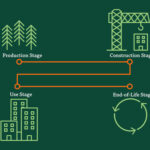
Introduction to Whole Building Life Cycle Assessment: The Basics
A summary of life cycle changes and considerations for choosing and performing whole building life cycle assessments.
View the resource -
Life Cycle Assessment Index
Stay informed on building-level life cycle assessment (LCA) data for North American wood buildings.
View the resource -

Developing a Functionally Equivalent Design for Comparative WBLCA
Identify what is required for two or more building designs to be compared to each other.
View the resource -
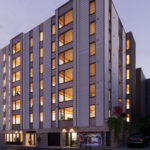
Considerations & Worksheet for Structural WBLCA of Mass Timber Buildings
Guidance for mass timber building designers undertaking whole building life cycle assessment (WBLCA)
View the resource -

WBLCA Worksheet
This fillable PDF steps through common decisions building designers need to make in each phase of an LCA. It is a companion to the paper, Considerations and Worksheet for Structural WBLCA of Mass Timber Buildings.
View the resource -
Quantifying Light-Frame Components for LCA
An approach to accurately capturing light-frame elements not explicitly modeled in BIM wall and floor assemblies.
View the resource -
Platte Fifteen Life Cycle Assessment
LCA study compares embodied carbon, construction costs, and construction speed of a real mass timber office project with functionality equivalent buildings in steel and concrete.
View the resource -
Mass Timber Comparative Life Cycle Assessment Series Introduction
Series of studies comparing the embodied carbon impacts and cost of mass timber buildings to functionally equivalent buildings
View the resource -
Return to Form Comparative Life Cycle Assessment Study
Compares a Type IV-B multi-family mass timber building over a I-A concrete podium to functionally equivalent cold-formed steel and concrete alternatives in terms of embodied carbon, cost, and construction speed
View the resource -
Nez Perce-Clearwater Office Comparative Life Cycle Assessment Study
Compares a Type V-B, two-story mass timber/light-frame wood hybrid and a functionally equivalent alternate designed in steel — in terms of embodied carbon, cost, and construction speed.
View the resource -
Burwell Center for Career Achievement Comparative Life Cycle Assessment Study
Compares a three-story, Type III-B mass timber building and a functionally equivalent alternate designed in steel—in terms of embodied carbon, cost, and construction speed.
View the resource -
Denver Office Comparative Life Cycle Assessment Study
Compares a four-story, Type III-A mass timber office building and a functionally equivalent alternate designed in steel—in terms of embodied carbon, cost, and construction speed.
View the resource -
Mass Timber Comparative Life Cycle Assessment Series Trends and Conclusions
Summarizes four studies comparing the embodied carbon impacts and cost of mass timber buildings to functionally equivalent alternatives
View the resource -
Mass Timber in Three Regions Comparative Life Cycle Assessment Study
Summarizes three studies comparing the embodied carbon and cost of conventional designs to mass timber alternatives in Atlanta, Denver, and Minneapolis
View the resource -
1510 Webster Whole Building Life Cycle Assessment
Compares a 19-story Type IV-A mass timber building and a functionally equivalent Type I-A concrete structure with a primary focus on embodied carbon
View the resource -
Vintage at the Overlook Whole Building Life Cycle Assessment
Compares a Type V-A light-frame wood building and a Type I-B cold-formed steel building with a primary focus on embodied carbon
View the resource -
Bush Middle School Whole Building Life Cycle Assessment
Compares a Type V-B mass timber building and a Type V-B steel building with a primary focus on embodied carbon
View the resource
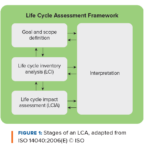
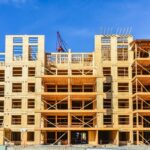



Carbon
-
Calculating the Carbon Stored in Wood Products
There are many complex elements associated with carbon accounting and life cycle assessment (LCA). Fortunately, the amount of carbon stored in wood is a straightforward calculation that remains consistent for each wood species.
View the resource -
When to Include Biogenic Carbon in an LCA
Part 1 in a series on biogenic carbon accounting for wood products – an overview of biogenic accounting practices as defined by international standards.
View the resource -
How to Include Biogenic Carbon in an LCA
Part 2 in a series on biogenic carbon accounting for wood products – specifics for each stage of the life cycle.
View the resource -
Biogenic Carbon Accounting in WBLCA Tools
Part 3 in a series on biogenic carbon accounting for wood products – the nuances of different tools.
View the resource -
Long-Term Biogenic Carbon Storage
Part 4 in a series on biogenic carbon accounting for wood products—covers long-term carbon storage and delayed emissions, and recommendations for reporting with ISO standards
View the resource -
Carbon Accounting Tools for Structural Systems
An overview of whole building life cycle assessment tools and carbon calculators available to building designers
View the resource -
What Net Zero Means in the Building Construction Industry
Demystifying the term ‘net zero,’ and how wood structural materials can help move buildings toward a net-zero carbon goal
View the resource -
LEED Credits for Use of Wood Products
Overview plus in-depth resource for understanding the contribution of structural wood products to LEED certification
View the resource



Environmental Product Declarations
-
Current EPDs for Wood Products
List of Environmental Product Declarations (EPDs) available for wood products
View the resource -
How to Use Environmental Product Declarations
Addresses the limitations of using EPDs alone to determine the environmental impacts of construction products
View the resource -
Understanding the Carbon Numbers in a Wood EPD
Guidance on how global warming potential and biogenic carbon are reported in the North American Softwood Lumber Environmental Product Declaration
View the resource