
- This event has passed.
Realizing Mass Timber’s Benefits: Key Design Decisions and Carbon Analysis
September 30 @ 11:00 am - 1:00 pm PDT
- Online
Regional Online Seminar (OR, ID-South, HI)
Mass timber is a unique, non-commodity building material and, to lay the groundwork for success, certain critical decisions must be made as early as possible. These decisions can have a big impact on cost, and can either increase or limit the opportunities available later in design. This presentation will examine early project decisions and design steps, focusing on how to optimize projects for mass timber to avoid price premiums. Topics will include construction types, fire ratings, column grids and beam/panel spans, acoustics, and MEP integration. Completed mass timber projects will be presented to illustrate the variety of viable options when navigating these key decisions.
Another important topic in mass timber building design is understanding how building material choice contributes to carbon impact. As more building designers utilize life cycle assessment (LCA) to compare the environmental performance of material and design alternatives, questions arise about how wood products and buildings should be analyzed. Most designers recognize the carbon-storing capability of wood but are unsure how to include it in their carbon analysis. This course will provide an in-depth look at biogenic carbon accounting, including when and how it should be counted, as well as a discussion of end-of-life assumptions.
Speaker:

Kate comes to WoodWorks with a decade of construction industry experience in the Pacific Northwest. Her involvement with wood structures began as an undergraduate student at Colorado State University, where she participated in the NeesWOOD CAPSTONE shake table test in Japan. She earned a dual Master of Science degree in Civil Engineering and Wood Science from Oregon State University with a focus in structural engineering. As a licensed Professional Engineer in Oregon and California, she was involved with the design of mass timber projects during the early stages of code development for CLT. Kate has experience in both the fields of engineering and construction management of multifamily podium buildings. Kate’s diverse background allows her to approach projects and problem solving holistically, with constructability and non-structural building systems in mind.
Credits: Attendees can earn 2.0 AIA/CES HSW LUs, 2.0 PDH credits or 0.2 ICC credits
Online Attendees:
- WoodWorks will send each attendee a certificate of completion within 2 weeks via email.
- Please note that to receive a certificate, attendees must stay for the duration of the event.
Learning Objectives:
- Discuss the impacts of construction type on required fire-resistance ratings of structural elements, noting the impacts that these ratings have on member spans and resulting grids.
- Highlight effective methods of integrating MEP services in a mass timber building and discuss the relative impacts of each on cost, aesthetics, occupant comfort, and future tenant renovations.
- Define biogenic carbon and understand how to calculate the amount of carbon stored in wood products.
- Explain biogenic carbon removals, emissions, and exports at each stage of a wood product’s life cycle, in alignment with ISO standards.
For questions or additional information, please contact:
Jaime Krohn, CMP | jaime@woodworks.org | (312) 841-8272
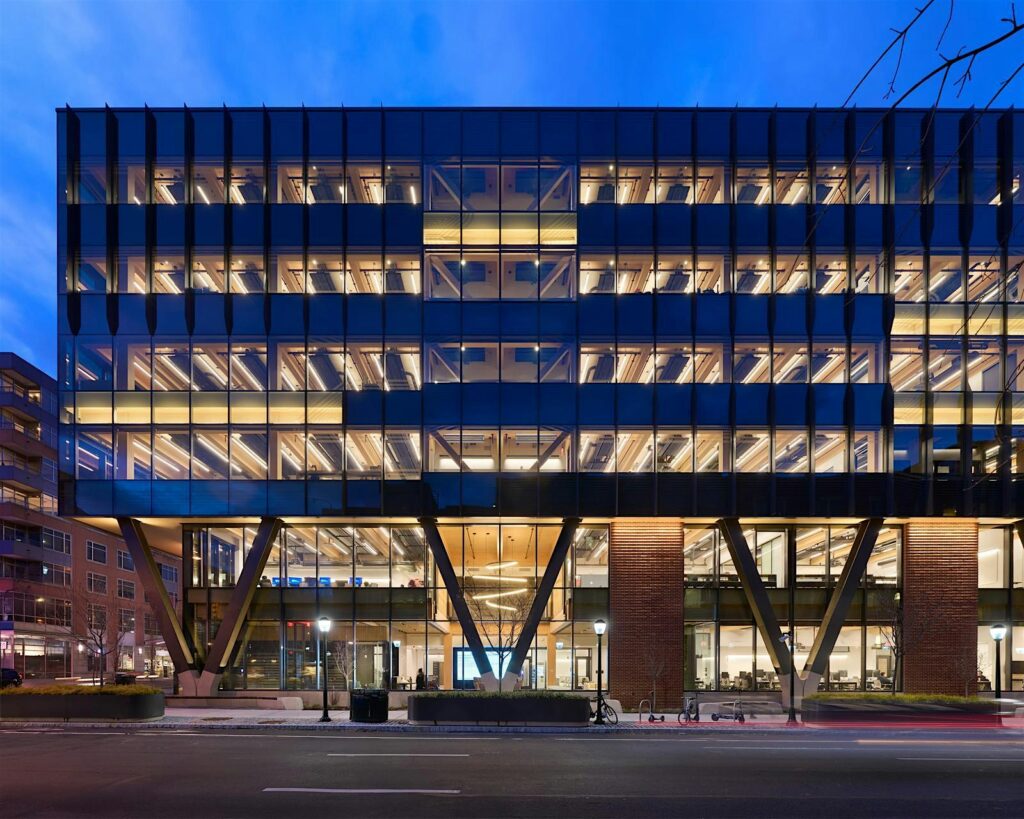
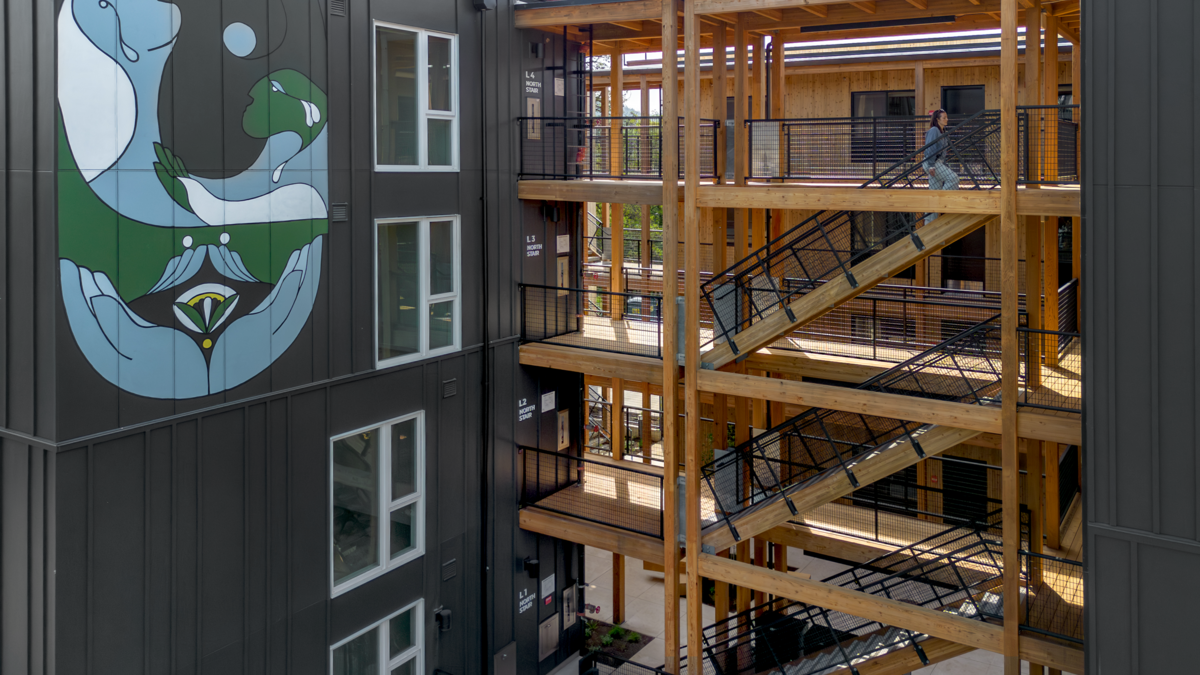
Image: Shortstack Mississippi, Works Architecture, DCI Engineers, Joshua James Huff Photography