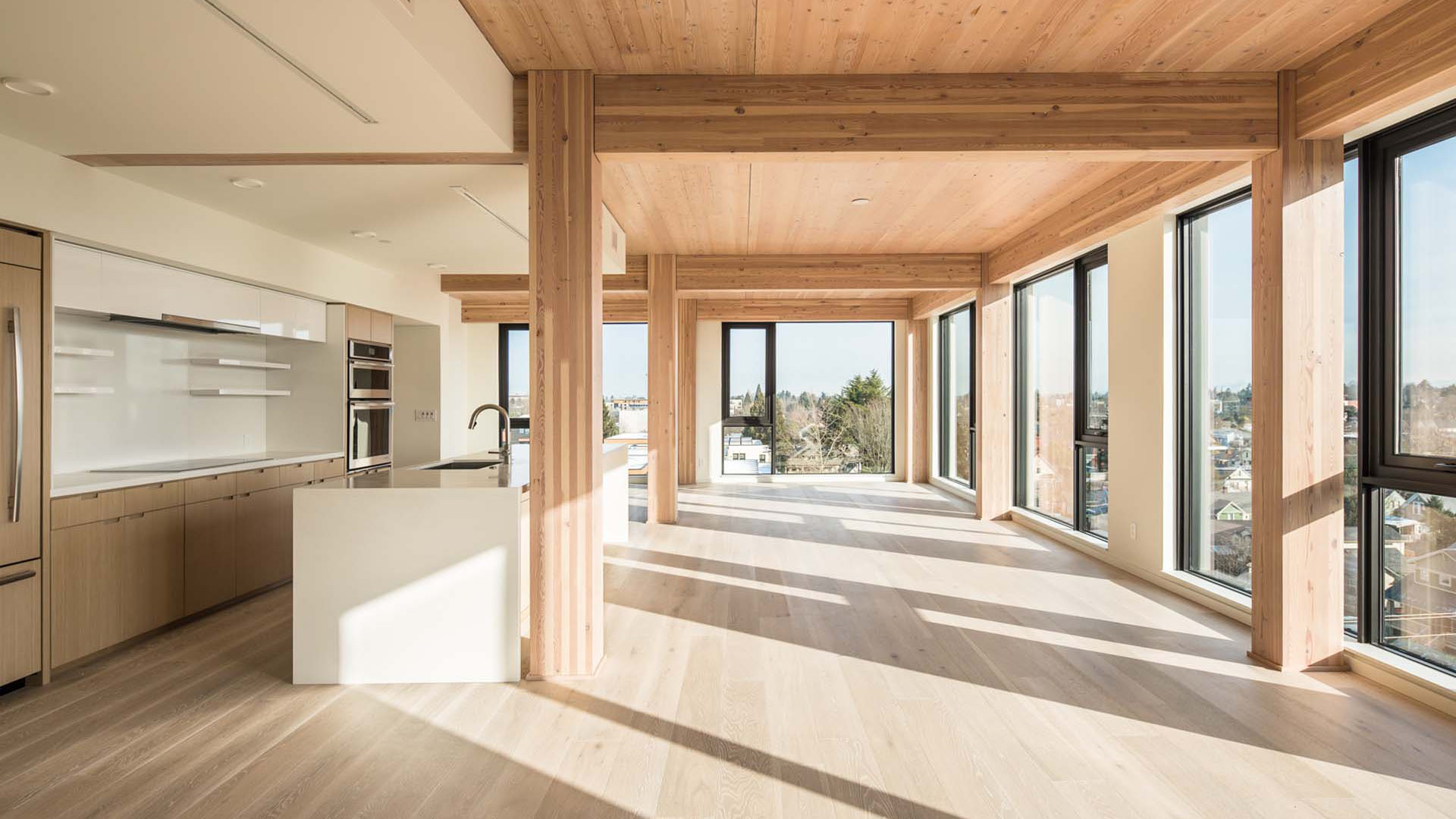
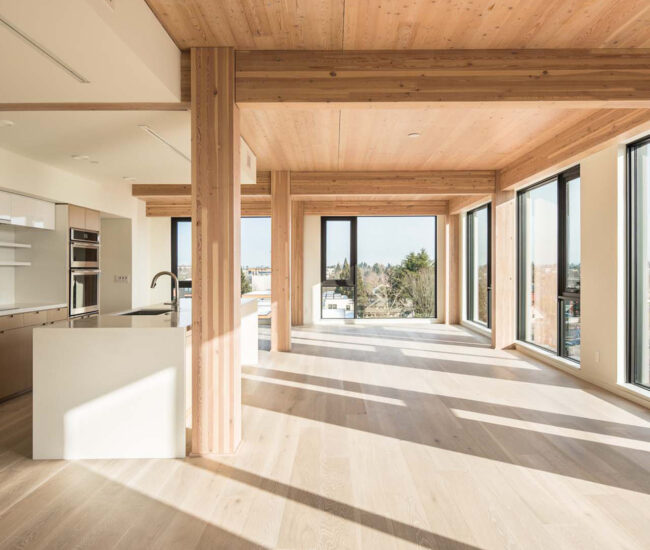
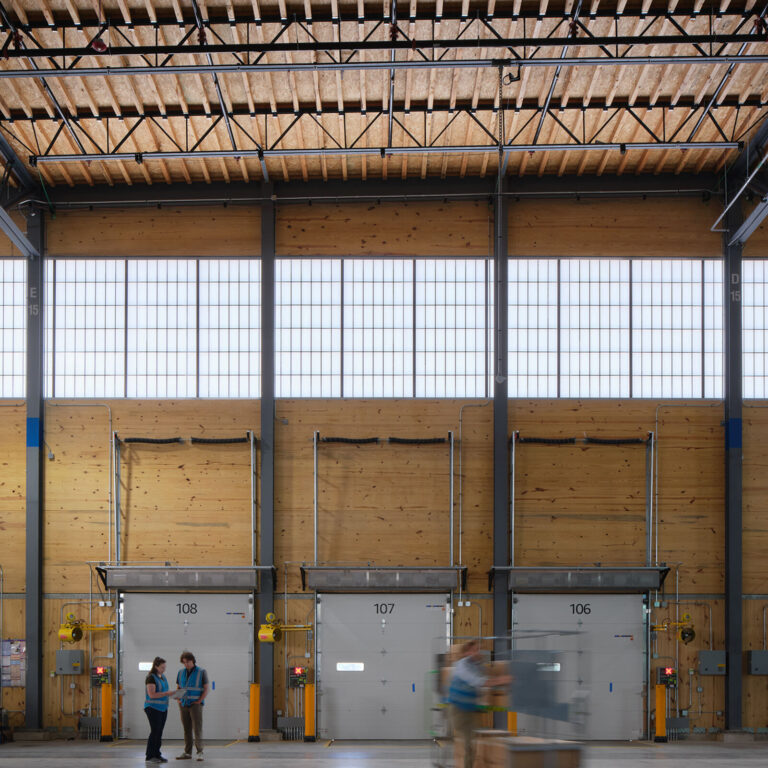
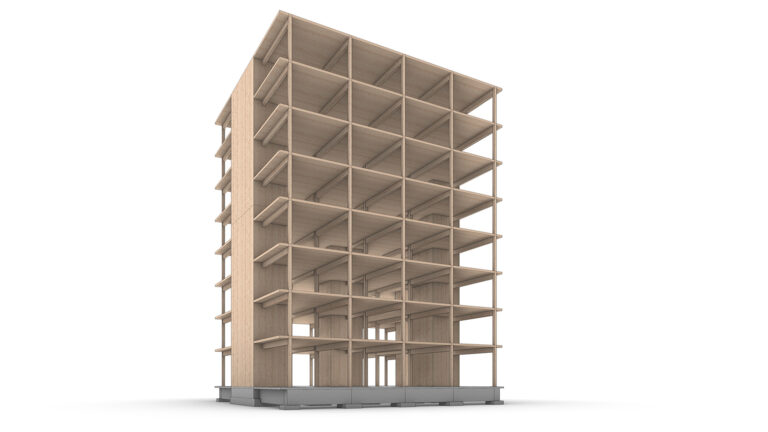
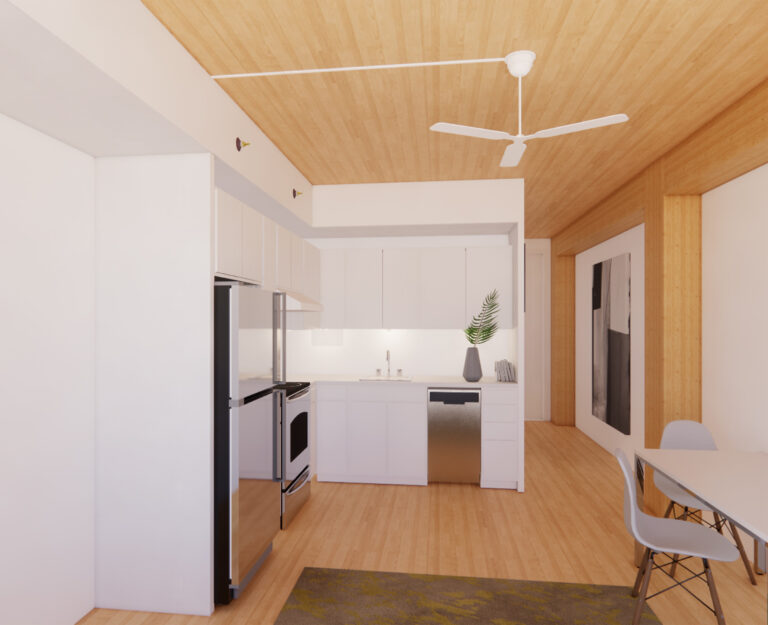
Over the past 20 years, there has been growing interest in tall buildings constructed from mass timber materials as a means to achieve greater urban density with more sustainable construction. Worldwide, there are now dozens of buildings with more than seven stories of timber construction.
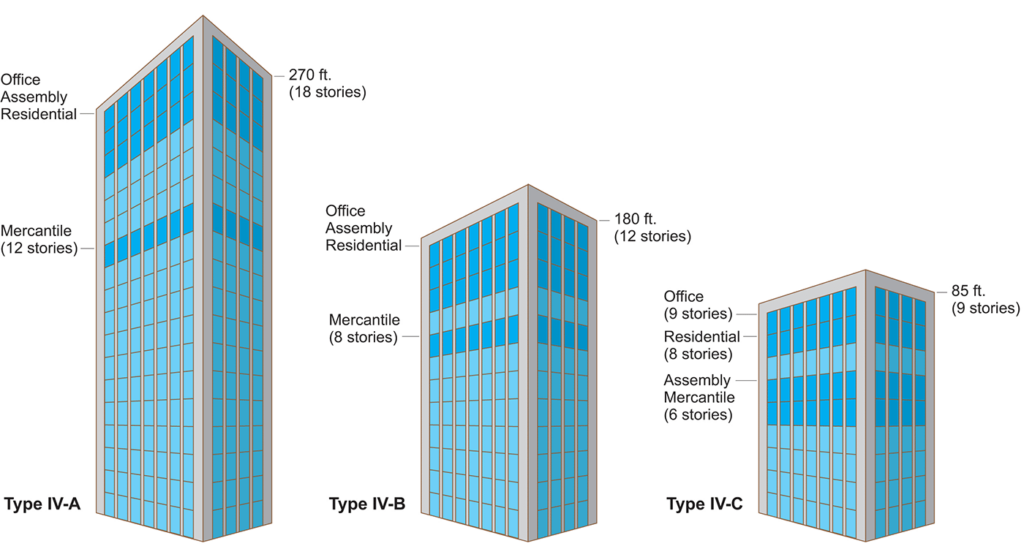
In the U.S., the 2021 and 2024 versions of the International Building Code (IBC) include three new construction types—Type IV-A, IV-B and IV-C—that allow the use of mass timber or noncombustible materials in buildings up to 18, 12 and nine stories (respectively). These construction types are based on the previous Heavy Timber construction type (Type IV, changed to IV-HT in the 2021 IBC) but with additional requirements regarding fire-resistance ratings and the use of noncombustible protection.
Mass timber projects designed under the 2018 or earlier versions of the code are generally constrained by prescriptive building height limits of five to six stories depending on the occupancy group. The term “tall timber” is associated with buildings that exceed the limits of previous codes for number of stories, height, and in some cases area.
If you’re interested in pursuing a tall timber project in the U.S., see below for commonly asked questions and resources. WoodWorks also provides free technical support to developers and design/construction teams. For assistance, contact the WoodWorks Regional Director local to you or email help@woodworks.org.
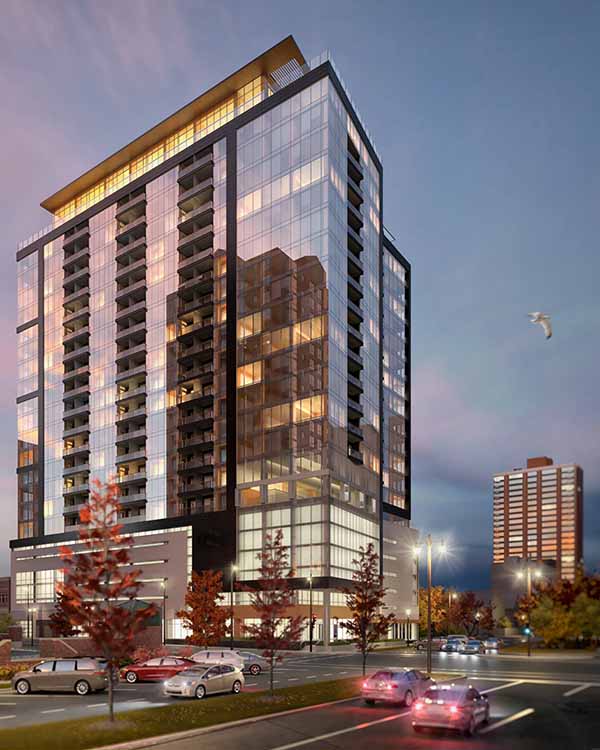
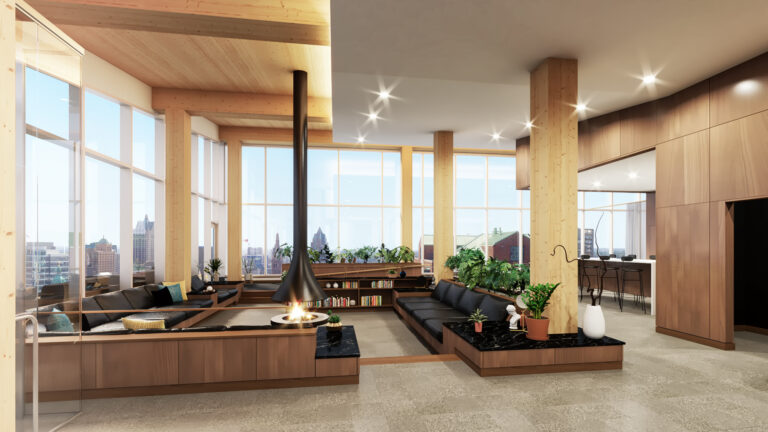
Ascent / Korb + Associates Architects
Notable Tall Timber Buildings
Visit the WoodWorks Innovation Network for a searchable map of mass timber projects in the U.S. (and elsewhere), and to learn about their project teams. Here’s a link to the map filtered for tall mass timber buildings.
Notable projects that go beyond the prescriptive limits of the 2018 and earlier editions of the IBC include:
Built or Under Construction:
1510 Webster – Oakland, CA – 19 stories, 16 of which are mass timber
Carbon12 – Portland, OR – Eight stories of mass timber
INTRO – Cleveland, OH – Eight stories of mass timber over a one-story concrete podium
Ascent – Milwaukee, WI – 19 stories of mass timber over six stories of concrete
80M – Washington, DC – Two new mass timber floors + habitable penthouse over an existing seven-story structure
Apex Clean Energy – Charlottesville, VA – Six stories of mass timber over two stories of concrete
Baker’s Place – Madison, WI – 12 stories of mass timber over a three-story concrete podium
11 E Lenox – Boston, MA – Seven stories of mass timber
Heartwood – Seattle, WA – Eight stories of mass timber
Minnesota Places – Portland, OR – Seven stories of mass timber over a concrete podium
TimberView – Portland, OR – Eight stories of mass timber
Bridge District, Parcel 5 – Washington, DC – 12 stories of mass timber over a one-story concrete podium
1523 Harrison – Oakland, CA – 11 stories, nine of which are mass timber
Tall Timber FAQs
1. What is the current status of tall mass timber building code adoption in the U.S.?
Follow this link to see which states have adopted the IBC 2021, IBC 2024, or the tall wood code provisions.
2. What are the height limits for the new construction types?
3. What are the timber exposure limits for Types IV-A, IV-B, IV-C and IV-HT construction?
Required Noncombustible Protection on Mass Timber Elements by Construction Type
IV-A
IV-B
IV-C
IV-HT
Timber Exposure Allowances
No exposed timber permitted
Ceilings and integral beams up to an area equaling 20% (per 2021 IBC) or 100% (per 2024 IBC) of fire area or dwelling unit area or Walls and integral columns up to an area equaling 40% of fire area or dwelling unit area or A combination of each, with the sum of ratios (actual exposed divided by allowable exposed) not to exceed 1.0
Full interior timber exposure permitted*
Full interior timber exposure permitted*
Interior Surface of Building Elements
Always required; 2/3 of FRR, 80 minutes minimum
Required with exceptions; 2/3 of FRR, 80 minutes minimum
Not required*
Not required*
Exterior Side of Exterior Walls
40 minutes
40 minutes
40 minutes
15/32″ FRT sheathing or 1/2″ gypsum board or noncombustible material
Top of Floor (above Mass Timber)
1″ minimum
1″ minimum
Not required*
Not required*
Shafts
2/3 of FRR, 80 minutes minimum, inside and outside
2/3 of FRR, 80 minutes minimum, inside and outside
40 minutes minimum, inside and outside
Not required*
*Not required by construction type. Other code requirements may apply. 5/8″ Type X gypsum = 40 minutes
4. What are the fire-resistance rating requirements for tall mass timber?
FRR Requirements for Tall Mass Timber Structures (hours)
Building Element
IV-A
IV-B
IV-C
Primary Frame
3
2
2
Exterior Bearing Walls
3
2
2
Interior Bearing Walls
3
2
2
Roof Construction
1.5
1
1
Primary Frame at Roof
2
1
1
Floor Construction
2
2
2
Source: 2021 International Building Code (IBC) Table 601
5. How are design teams leveraging tall mass timber code provisions to maximize the amount of timber exposure?
Follow this link for an article that discusses how teams are utilizing the new code provisions to enhance the appearance of their tall mass timber structures with exposed timber framing.
6. I’ve heard that the 2024 IBC allows 100% timber ceiling exposure in Type IV-B construction, up to 12 stories tall. Is that correct?
Yes, the 2024 IBC includes new code provisions that allow timber ceiling exposure in Type IV-B construction up to 100%. The 2024 code has been adopted by several states in its entirety, while some states and cities have incorporated just the new Type IV-B provisions. See this page for the status of state adoptions. In jurisdictions where the new limits have not been adopted, several design teams have successfully used the 2024 code provisions to receive a variance allowing for increased timber exposure in Type IV-B construction. The 2024 IBC can be viewed at ICC Digital Codes.
Solution Papers
Tall Wood Buildings in the 2021 IBC – Up to 18 Stories of Mass Timber
Looking for information on the tall wood provisions in the 2021 IBC? This paper summarizes the provisions as well as the background and research that supported their adoption.
Find fire and acoustically-rated assemblies, connections, and penetrations using this evolving database of systems compliant with North American standards
Staffed by engineers, architects and construction experts, we help project teams identify and successfully realize the most appropriate wood solutions for their projects. Watch this short video to learn more and contact us for free project support.