Expert Tips
Treatment Options for CLT and Limits on Exterior Use
Code limitations on exterior-exposed CLT and considerations for preservative treatment in termite-prone dry service applications
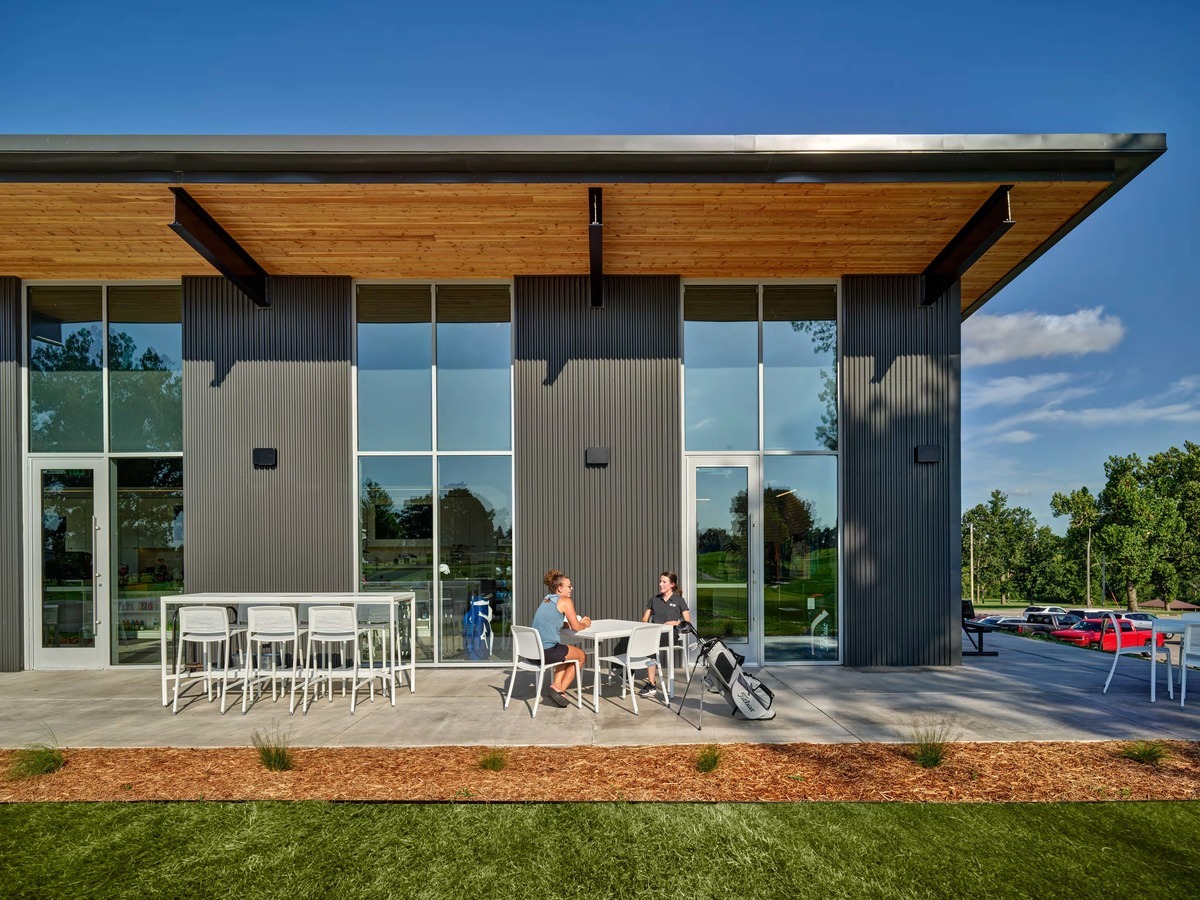
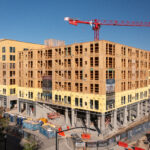
Photo Cameron Campbell, Integrated Studio
This article references the 2024 International Building Code (IBC), 2024 National Design Specification® (NDS®) for Wood Construction, ANSI/APA PRG 320-19, Standard for Performance-Rated Cross-Laminated Timber (PRG 320), and ANSI/APA PRG 320-25.
Dry Service Applications of CLT
Q: Can CLT be used as an exterior exposed material?
A: Unless protected from direct precipitation and wetting, such as under an overhanging roof, the IBC and referenced standards do not recognize CLT as approved for wet service applications.
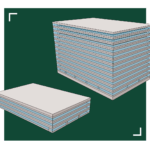
Cross-laminated timber (CLT) is a prefabricated engineered wood product made from at least three layers of solid-sawn lumber or structural composite lumber, with adjacent layers cross-oriented and bonded with structural adhesive to form a solid structural element. For more information on CLT and the spectrum of mass timber products, see https://www.woodworks.org/resources/what-is-mass-timber/
Under the IBC, CLT is recognized as a qualified product when manufactured in accordance with PRG 320, which establishes qualification, quality assurance, layup requirements, adhesive requirements, structural performance criteria, and product marking for structural CLT. Structural design of CLT is addressed in NDS Chapter 10.
These codes and standards are specific to dry service applications of CLT. In the NDS, the engineering design provisions for CLT apply to dry service conditions where the in-service moisture content is less than 16%, as is the case in most covered structures. CLT is not to be used in higher-moisture service conditions unless the CLT manufacturer specifically permits such use. Even with manufacturer approval, the NDS does not provide wet-service factors applicable to CLT design; it does not provide a generic wet-service design path for CLT. PRG 320 provides the same limitation on CLT product qualification being recognized for use in “dry service conditions, such as in most covered structures.” PRG 320 quantifies dry service conditions for the U.S. as those where the average equilibrium moisture content of solid wood is less than 16%. For more information on how atmospheric conditions can be related to equilibrium moisture content in wood, see the USDA Forest Products Laboratory publication Wood Handbook: Wood as an Engineering Material, Chapter 4. https://research.fs.usda.gov/fpl/wood-handbook.
Therefore, the IBC recognizes CLT as a structural product for dry-service applications; it does not recognize CLT for in-service wet use or exterior-exposed applications. IBC-referenced standards support the use of CLT as a structural product in buildings but do not address weather-exposed conditions, persistent wetting, ground contact, or other applications in which panels are expected to remain at elevated moisture content for extended periods. Common dry service applications include CLT inside the weather-protection envelope of most buildings and applications exposed to exterior air but protected from direct wetting by precipitation, including wind-driven rain. For example, CLT used as the roof deck of an open-air pavilion may meet dry-service criteria if the panels are protected from repeated direct wetting.
While CLT should be protected from prolonged moisture exposure, it is a robust structural material and does not lose integrity from incidental wetting. Like the Exposure 1 classification of wood structural panels, CLT panels manufactured following PRG 320 “resist the effects of moisture on structural performance as may occur due to construction delays or other conditions of similar severity.” CLT is frequently exposed to weather during construction and commonly performs as intended. However, CLT exposed to significant moisture during construction should be dried to the required in-service moisture content range. Long-term exposure to moisture levels above the dry-service levels may void the manufacturer warranty and PRG 320 certification. Concepts and strategies to avoid excessive moisture exposure during construction are discussed in https://www.woodworks.org/resources/mass-timber-moisture-management-for-construction/
Preservative-Treated CLT
Q: Are there dry-service CLT applications where preservative treatment is prudent or required due to biological hazards?
A: Yes, but carefully consult manufacturers and treaters on product availability, design recommendations, and product warranties. In many cases, treatment after manufacturing will invalidate the product certification and warranties. Manufacturers who directly support treatment typically have preferred methods, treaters, and conditions of use.
Even within dry-service conditions, some applications require preservative-treated wood products or wood products made of naturally durable species. For decay resistance, the IBC recognizes the heartwood of redwood, cedars, black locust, and black walnut as naturally durable. For termite resistance, the IBC recognizes the heartwood of redwood, Alaska yellow cedar, eastern red cedar, and western red cedar as naturally durable. In addition to IBC recognition, when using naturally durable species to mitigate termite risks, it is advisable to understand the resistance of the wood species under consideration to the specific biological risks of the planned application. While permissible, as of the summer of 2026, there are no known commercial manufacturers of PRG 320-compliant CLT made from IBC-recognized naturally durable species.
IBC Section 2304.12 requires wood to be protected from decay and termites in accordance with applicable provisions, and Section 2304.12.1 identifies above-ground locations where naturally durable or preservative-treated wood is required. Where possible, design and detail buildings so these requirements do not apply to CLT components. One common condition is CLT walls on the first story of a building within the protective exterior covering. Avoid direct contact between such CLT wall panels and concrete slabs, foundation walls, stem walls, or footings. An intermediate sill plate, impermeable sill pad, or other standoff component can serve as a capillary break between the concrete and CLT. Such detailing avoids triggering the IBC requirement for CLT wall panels to be preservative-treated and improves durability.
Even when detailing avoids IBC Section 2304.12 requirements for preservative treatment related to moisture protection, preservative-treated CLT may be desirable or required for termite resistance. A dry building interior in a termite-prone region may not create a decay hazard, but it can still have a significant termite hazard. Preservative treatment, where appropriate and supported by the manufacturer, may be a sensible risk-reduction strategy for dry-service CLT. Concealed spaces with limited inspectability, locations near grade, and assemblies where remediation after infestation would be difficult are cases where CLT may remain in dry service, but elevated regional biological exposure may justify preservative treatment or other termite protection measures.
Because CLT is a structural adhesive-bonded product, designers should approach preservative treatment with caution. The treatment process can affect moisture content, dimensional stability, adhesive bond performance, fastener corrosion, appearance, and manufacturer certification. Manufacturer approval is essential, including confirmation that the treatment is compatible with the product’s adhesive and structural design values. CLT design values are typically based on untreated dry-service CLT, so designers should not assume that published design values remain valid for treated products after manufacturing, unless the manufacturer or an approved evaluation report supports that position. It is also recommended that the project team verify that any warranties of structural performance remain in effect after treatment.
Connections also require attention. IBC Section 2304.10.6 requires fasteners, nuts, washers, and connectors in contact with preservative-treated wood to meet corrosion-resistance requirements. Corrosion-resistant fastener materials include hot-dipped zinc-coated galvanized steel, stainless steel, silicon bronze, and copper, with specific allowances for mechanically deposited zinc-coated steel. For SBX/DOT and zinc-borate-treated wood in an interior dry environment, the IBC permits plain carbon steel fasteners. Consult with the information, including evaluation reports, from both the chemical treatment provider and the fastener manufacturer for recommended fastener material or coatings to use with the chemical treatment and use.
Field cutting is another consideration. Preservative treatment typically creates treated zones with treatment chemicals concentrated near the material’s surfaces; cutting, routing, core drilling, or notching after treatment can expose untreated wood. For cuts made after treatment, surface-applied treatments should follow the treater’s recommendations. AWPA M4 provides additional guidance for the field treatment of cuts and holes that penetrate the treated zone. Fabrication before treatment is preferable where possible, but CLT procurement sequences may not always allow it.
Conclusion
Preservative treatment can be useful for CLT, but it does not circumvent the dry-service requirements of code-recognized CLT. Under the IBC and referenced design standards, CLT certified to PRG 320 for building applications is recognized as a dry-service structural product only. Preservative treatment may still be necessary or desired for dry-service CLT in termite-prone or otherwise biologically hazardous conditions. Commercial North American CLT with elevated termite resistance remains an area of product development and testing. For these applications, the design must rely on moisture control, a durability strategy, and manufacturer and treatment support through material testing and appropriate approvals in a comprehensive manner that addresses both the wood product and the complete assembly.