Expert Tips
Interior Walls in Mass Timber Buildings
Material allowances and fire-resistance ratings (FRRs) of interior walls in Types III, IV, and V construction
This article references the 2024 International Building Code (IBC).
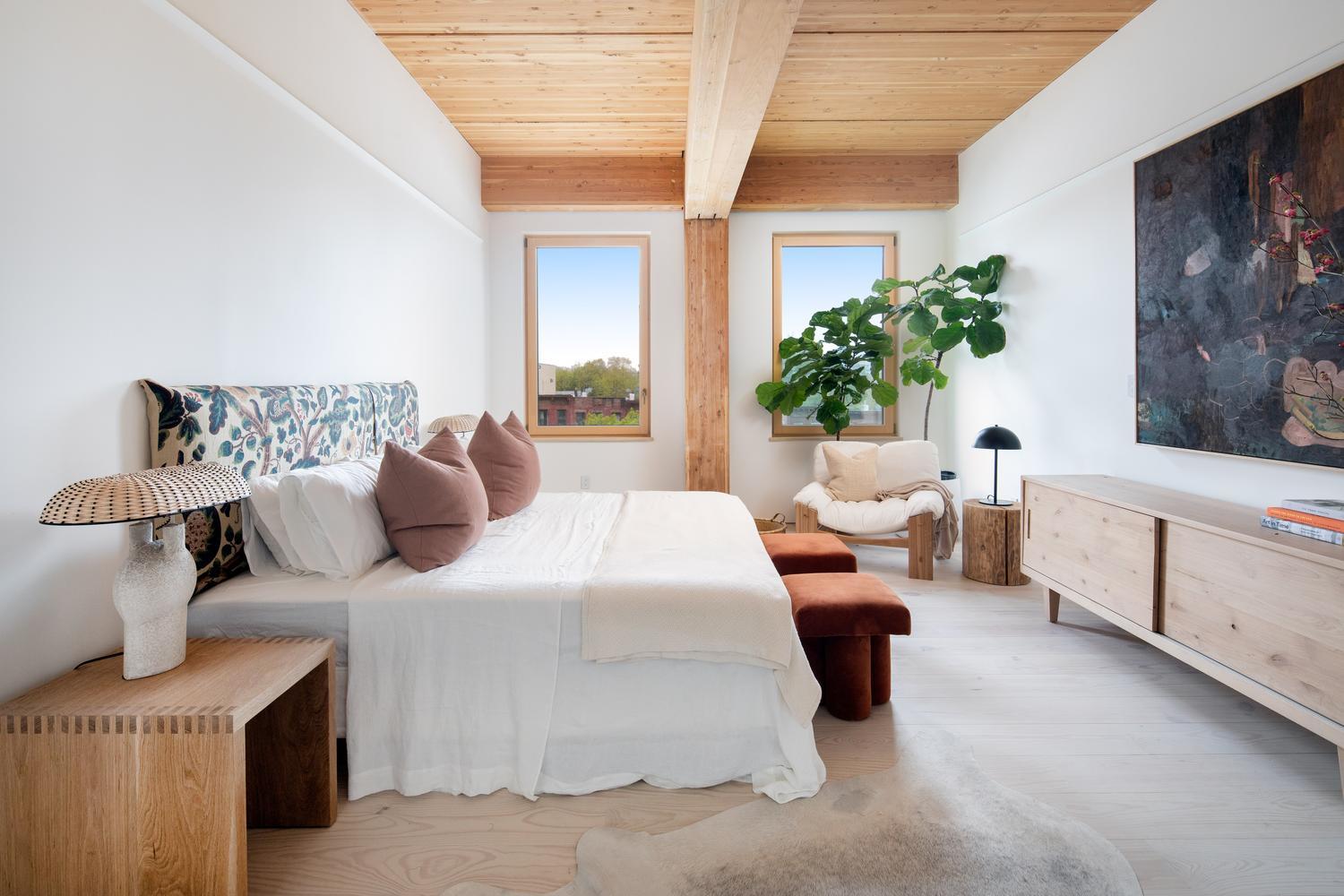
With few exceptions, the IBC permits the use of mass timber products throughout Types III, IV, and V construction. In these buildings, wood products meeting heavy timber size requirements are commonly used for structural framing elements such as beams, columns, and floor and roof panels, which can often be left exposed to the interior. However, interior walls are regularly constructed with other materials. Materials allowed by the code for interior wall construction and the required fire-resistance ratings (FRRs) of these walls vary by construction type and function. This article discusses the related code provisions and common functions of interior walls in mass timber buildings.
Interior Wall Types
Interior walls are load-bearing or non-load-bearing and, depending on location, may also function as fire partitions, fire barriers, or fire walls. When that is the case, permitted materials, FRRs, and continuity requirements may be more restrictive than those dictated by the building construction type.
Select wall functions and applications and their relevant sections in the IBC include:
- Fire partitions (Section 708)
- Separation walls in Group R occupancies (Section 420.2)
- Corridor walls (Section 1020.3)
- Walls separating dwelling and sleeping units in Groups R-1 and R-2 (Sections 907.2.8.1 and 907.2.9.1)
- Other applications listed in Section 708
- Fire barriers (Section 707)
- Shaft walls (Section 713)
- Enclosures for exit stairways, ramps, and passageways (Sections 713, 1023, and 1024)
- Separated occupancies (Section 508.4)
- Fire areas (Section 903.2)
- Other applications listed in Section 707
- Fire walls (Section 706)
- Party walls—i.e., building separation walls (Section 706.1.1)
Of these three wall types, fire partitions generally have the least restrictive requirements, while fire walls are the most restrictive.
Permitted Materials Based on Construction Type
IBC Section 602 defines five main construction types. Types I, II, III and V have subcategories A and B, and Type IV has these plus others. The 2021 version of the code renamed Type IV construction Type IV-HT and introduced three new subcategories—IV-A, IV-B and IV-C—which allow taller mass timber buildings than previous versions. For information about tall mass timber options and design impacts, see WoodWorks’ Tall Mass Timber webpage.
Types III and V (Sections 602.3 and 602.5) – Structural elements in Type III and V buildings, including floors, roofs, and both exterior and interior walls, can be built from any code-recognized material.
This results in the following options for interior walls:
- Light-frame wood walls
- Mass timber walls (exposed or concealed)
- Light-gauge steel walls
- Other code-compliant wall systems (combustible or noncombustible)
Type IV (Section 602.4) – Heavy timber or noncombustible materials are permitted for structural elements in all of the Type IV subcategories. In the IBC, heavy timber refers to wood products meeting the minimum sizes given in Section 2304.11 to be used as floors, roofs, beams, columns, and interior walls—including sawn timber and glulam as well as products like CLT, GLT, NLT and DLT that are commonly referred to as mass timber. Because this construction type is based in part on the inherent and long-demonstrated fire resistance of large solid wood framing, light-frame wood materials (e.g., 2x wall framing and wood structural panels) are generally prohibited in interior walls—with one notable exception for Type IV-HT as described below.
Types IV-A, IV-B, and IV-C (Sections 602.4.1, 602.4.1, and 602.4.3) – Heavy timber or noncombustible materials can be used throughout these Type IV subcategories, with one exception. Interior stair and elevator shafts in buildings that exceed twelve stories and 180 feet above grade plane must be constructed of noncombustible materials per Section 602.4. The code commentary clarifies that other shafts, like those for mechanical equipment, are not restricted to noncombustible materials and can be constructed of heavy timber with noncombustible protection. For more information, see the WoodWorks publication, Shaft Wall Requirements in Tall Mass Timber Buildings.
This results in the following options for interior walls:
- Heavy timber walls (exposed or concealed as required by construction type)
- Light-gauge steel walls
- Concrete walls
- Masonry walls
- Other code-compliant, noncombustible wall systems
Type IV-HT (Section 602.4.4) – Type IV-HT buildings have the same interior wall options as the other Type IV subcategories, plus additional options permitted in Section 602.4.4. This section is specific to interior elements and permits interior walls and partitions with a minimum 1-hour FRR or heavy timber conforming to Section 2304.11.2.2.
These additional options include:
- Solid wood construction formed by:
- Minimum two layers of 1-inch matched boards
- Similar to tongue and groove, “matched board” is an older term defined as lumber that has a tongue cut along one edge and a groove cut along the opposite edge, allowing it to fit tightly with other boards cut the same way. While possible, it is rare to use two layers of tongue-and-groove framing for modern wall construction.
- Minimum 4-inch-thick laminated construction, including CLT, GLT, NLT, and DLT
- Minimum two layers of 1-inch matched boards
- Other code-compliant materials, such as light-frame wood and light-gauge steel, provided the wall has at least a 1-hour FRR, even if an FRR is not required by other sections in the code
Instances where interior walls are not heavy timber and thus require a 1-hour FRR can present a challenge. For example, a glass wall around an interior conference room in an office building and an interior wall within a multi-family dwelling unit, neither of which are typically rated, would both require a 1-hour FRR.
All Type IV subcategories (A, B, C, and HT) have additional protection requirements for concealed spaces. However, unique to Type IV-HT, Section 602.4.4.3 excludes additional protection requirements where the concealed space is formed by the stud cavity of light-frame wood walls if the wall has a 1-hour minimum FRR. This exception does not apply to Types IV-A, IV-B, and IV-C construction since these types do not permit the use of light-frame wood stud walls. See the WoodWorks paper, Concealed Spaces in Mass Timber and Heavy Timber Structures for more information.
Permitted Materials Based on Wall Function
Allowable materials can also vary based on the function of the wall.
Fire partitions (Section 708) and fire barriers (Section 707) – Any material permitted for the type of construction can be used for these elements.
Fire walls (Section 706) – With the exception of Type V construction, only noncombustible materials can be used for fire walls. Fire wall assemblies in Type V buildings may include combustible materials such as light-frame wood or heavy timber, but the buildings on both sides of the wall are required to be Type V construction in order to do so.
Fire-Resistance Ratings for Interior Walls
As with material allowances, the IBC stipulates FRRs for interior walls in multiple code provisions, based on the building’s construction type and intended function of the wall. Where multiple provisions apply, the most restrictive FRR governs.
Interior Wall FRRs Based on Construction Type
When dictated by construction type, the required FRR of an interior wall is based on whether it is load-bearing or non-load-bearing, per Table 601.
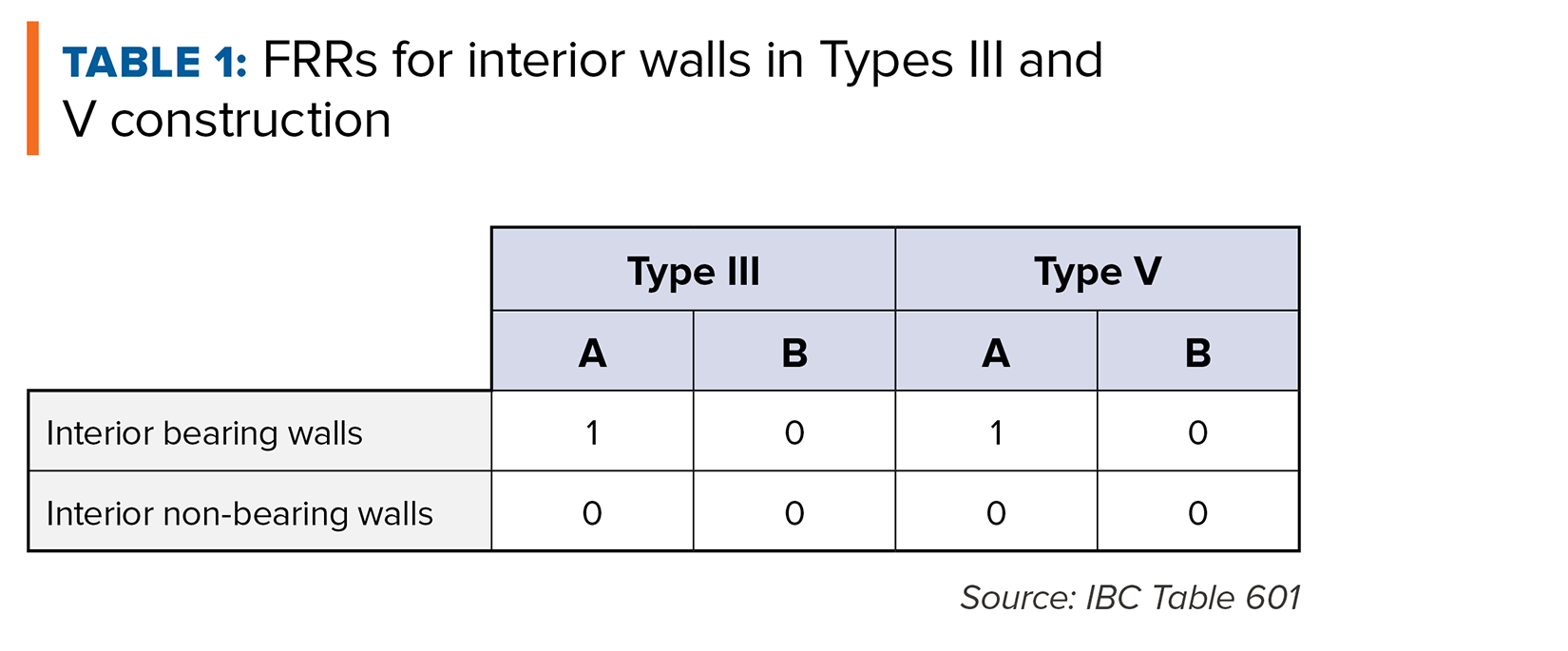
Types III and V (Section 602.3 and Section 602.5) – FRRs of interior load-bearing and non-load-bearing walls are shown in Table 1.
Type IV (Section 602.4) – The Type IV subcategories differ in their required FRRs (outlined in IBC Table 601) and whether the wood may be exposed on the building’s interior or must be covered with noncombustible protection. See What are the timber exposure limits for Types IV-A, IV-B, IV-C, and IV-HT construction? on WoodWorks’ Tall Mass Timber webpage.
Where timber elements are permitted to be exposed to the interior of the building, they must provide the full FRR. If the timber elements are covered with noncombustible materials, the FRR may be calculated per Section 722.7 as the sum of the protecting materials and the inherent FRR of the timber element. For more information, see the WoodWorks publication, Demonstrating Fire-Resistance Ratings for Mass Timber Elements in Tall Wood Structures.
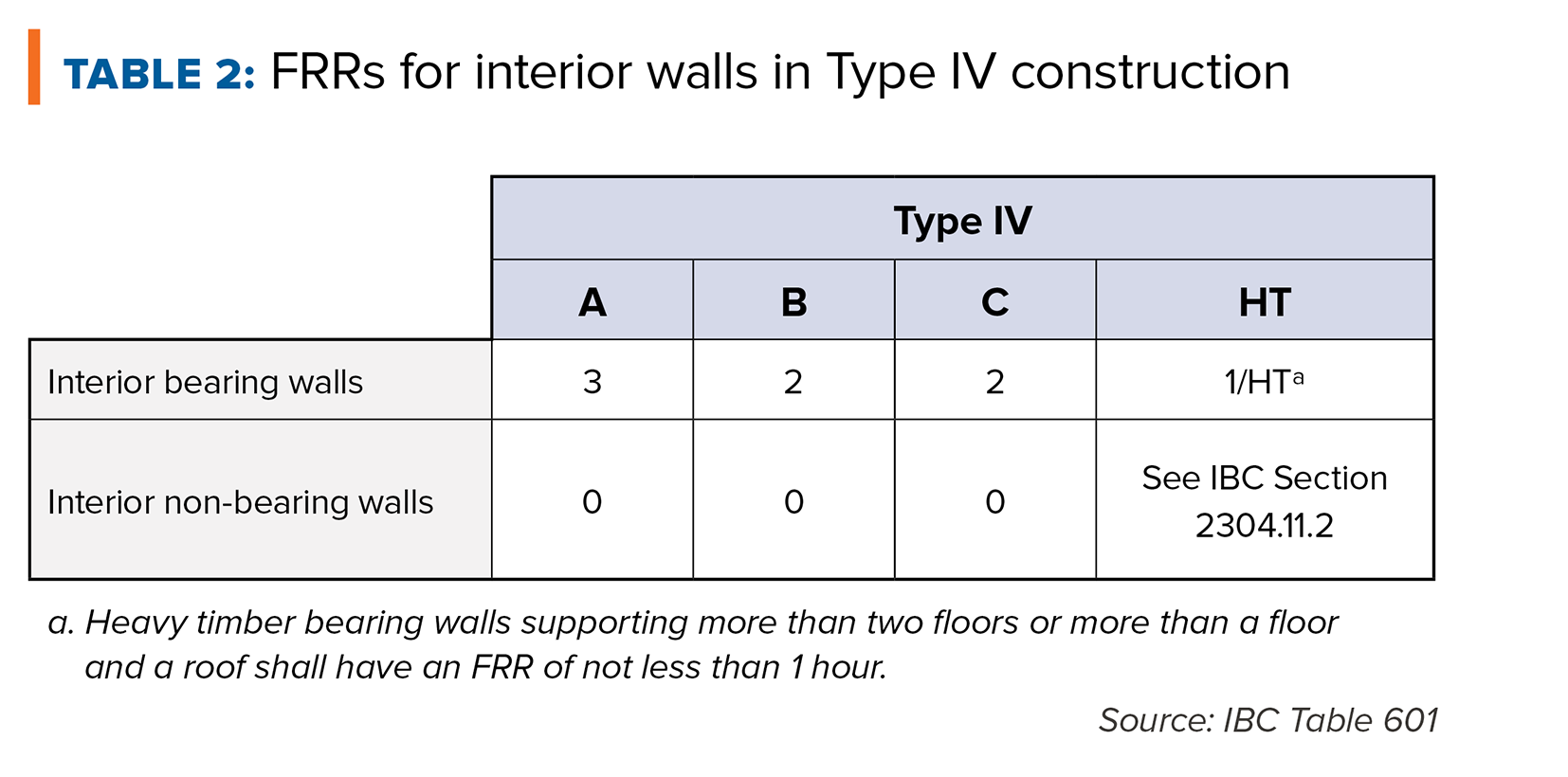
In general, timber components used in Type IV-HT projects do not have a prescriptive FRR per IBC Table 601; however, FRRs might be required by other code provisions. For example, footnote g in Table 601 requires heavy timber bearing walls supporting more than two floors or more than a floor and a roof to have a minimum 1-hour FRR. As noted, Section 602.4.4 also requires a minimum 1-hour FRR for light-frame wood stud walls, whether load-bearing or non-load-bearing.
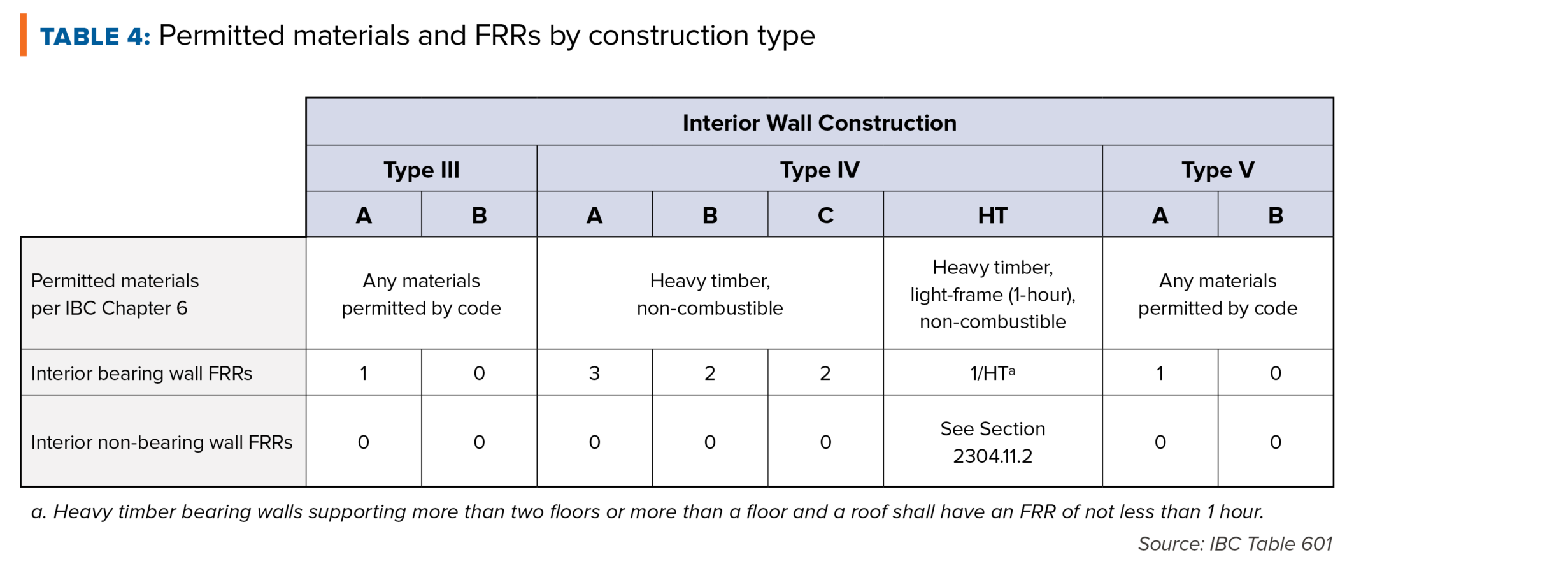
FRRs of interior load-bearing and non-load-bearing walls in Type IV are shown in Table 2.
Interior Wall FRRs Based on Wall Function
If an interior wall functions as a fire partition, fire barrier, or fire wall, the required FRR may differ from the required FRR based on the building construction type. As noted, the most restrictive FRR governs.
Fire partitions (Section 708) – Per IBC Section 708.3, the required FRR for most fire partitions is 1 hour, although there are exceptions that permit a 1/2-hour FRR.
Fire barriers (Section 707) – Per IBC Section 707.3, the required FRR for fire barriers varies based on their application as outlined in Sections 707.3.1 through 707.3.10.
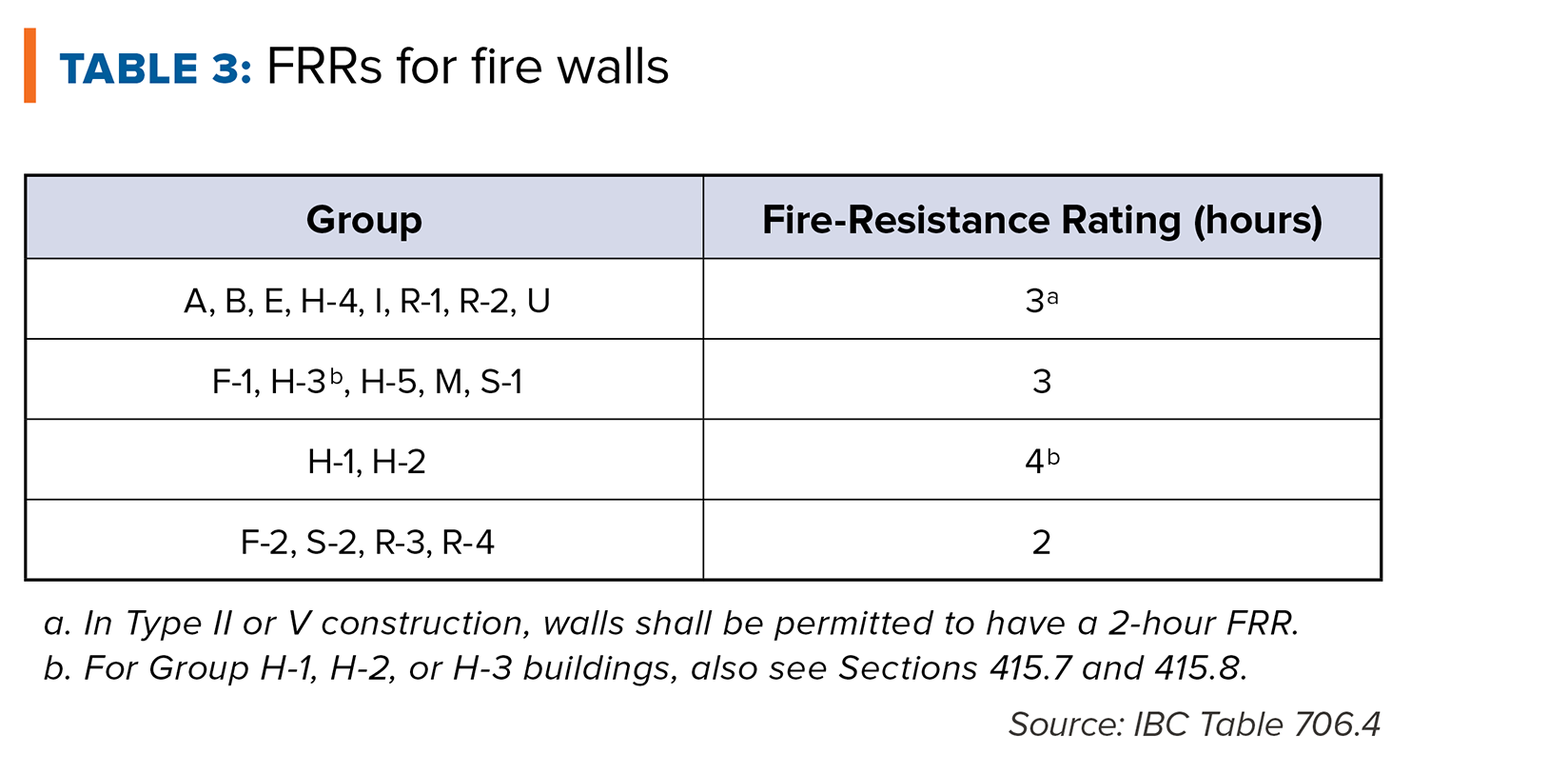
Fire walls (Section 706) – Per IBC Section 706.4, the required FRR for fire walls is based on occupancy type with limited exceptions for Type V construction. Fire wall FRRs range from 2 hours to 4 hours as set forth in Table 706.4. (See Table 3.)
Summary
With a wide range of construction types that can be used in the design of modern mass timber buildings, there is a corresponding range of options for interior wall assemblies—including wood products meeting the heavy timber size requirements in the IBC, light-frame wood, and noncombustible materials. Understanding the material allowances and FRR requirements for each construction type, based on the building’s occupancy and the wall’s loading condition, is the first step to choosing an appropriate assembly.
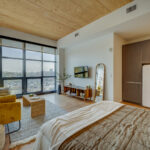
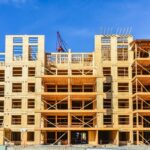
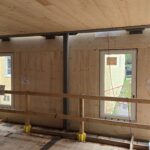
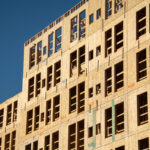
Examples of Interior Walls in Mass Timber Buildings
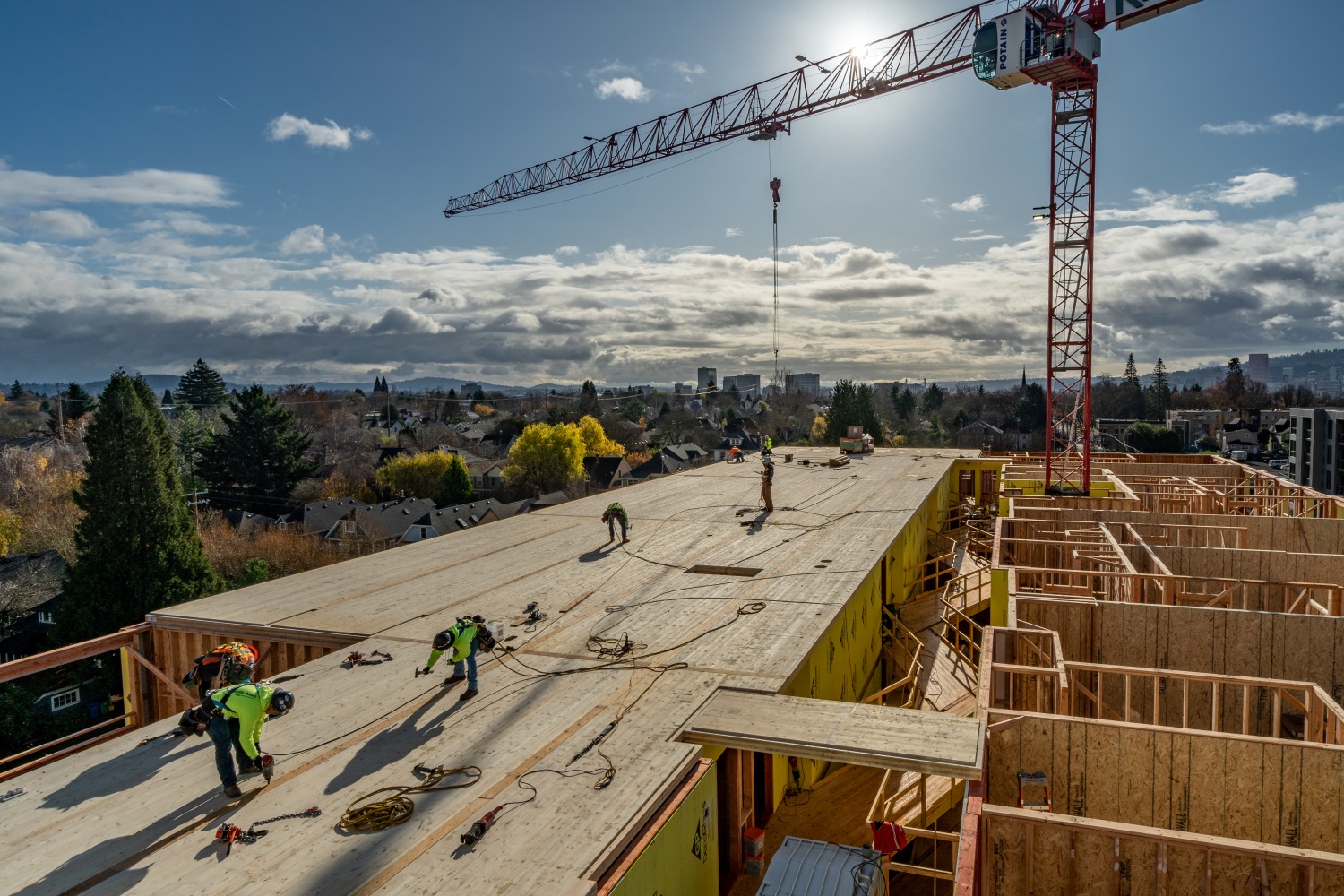
The Canyons / Kaiser+Path / Catena Consulting Engineers
Photo Marcus Kauffman
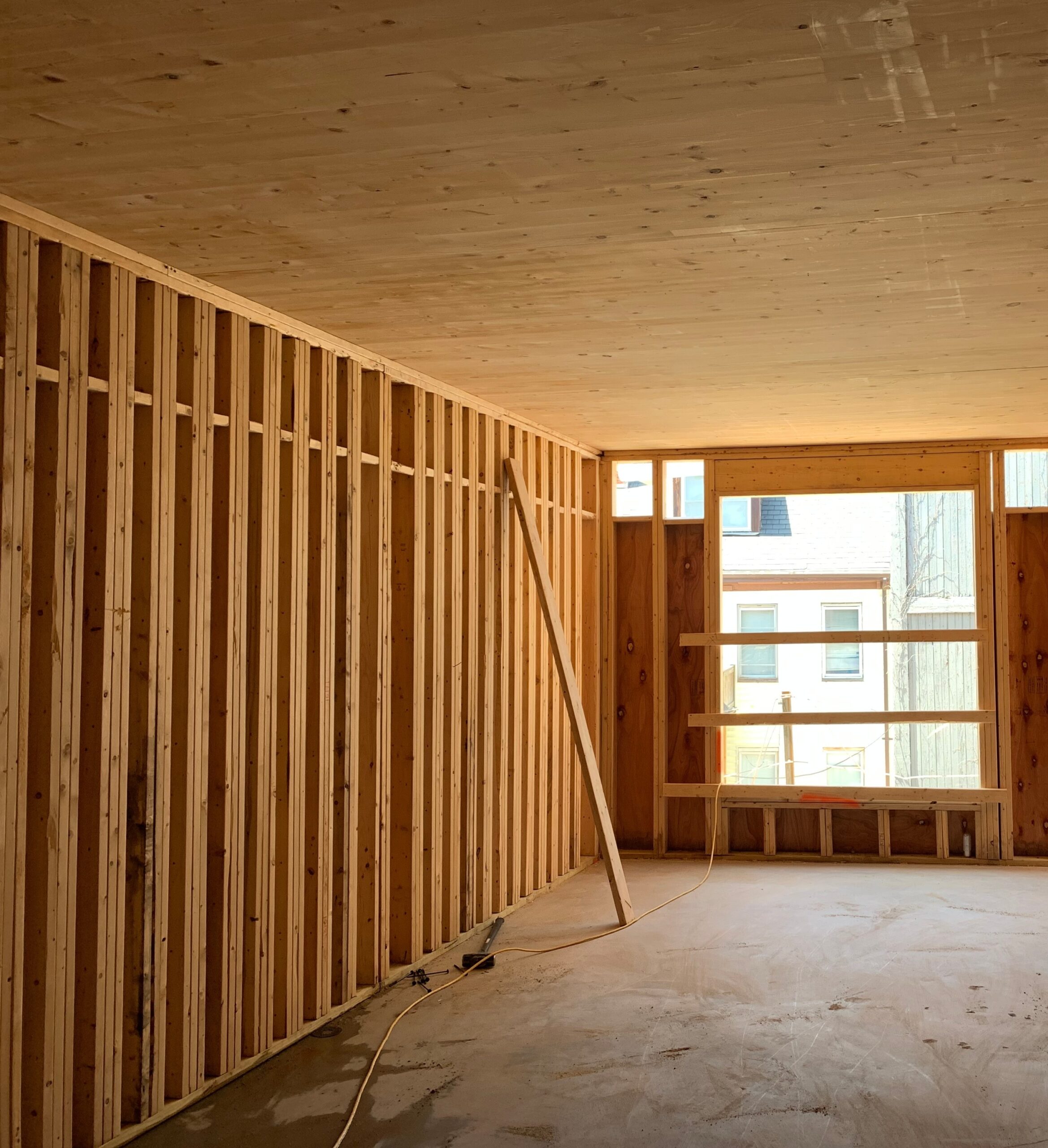
The Guild / Utile / RSE Associates
Photo Utile
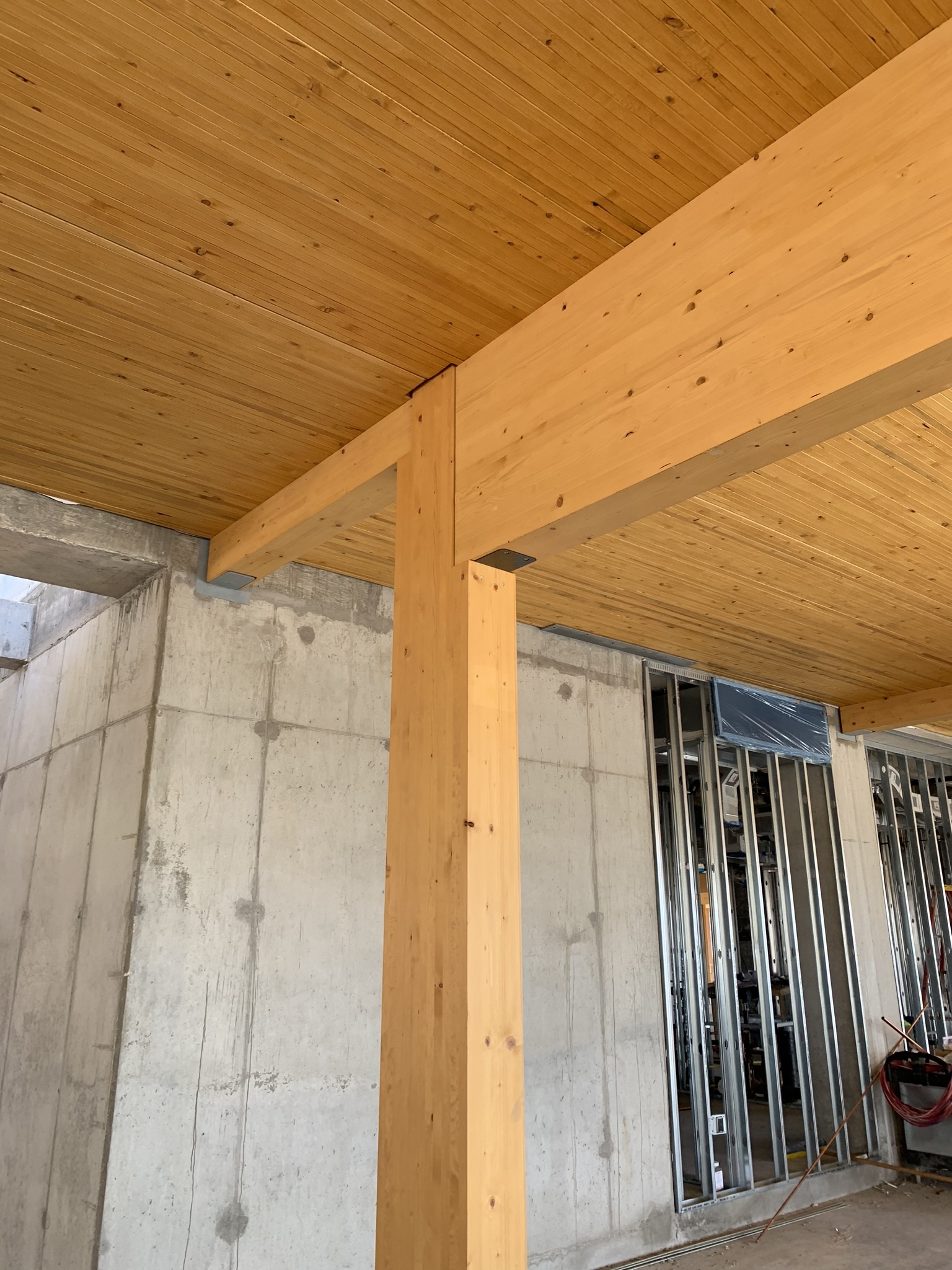
The Soto / Hixon Properties / Lake|Flato / BOKA Powell / StructureCraft
Photo WoodWorks
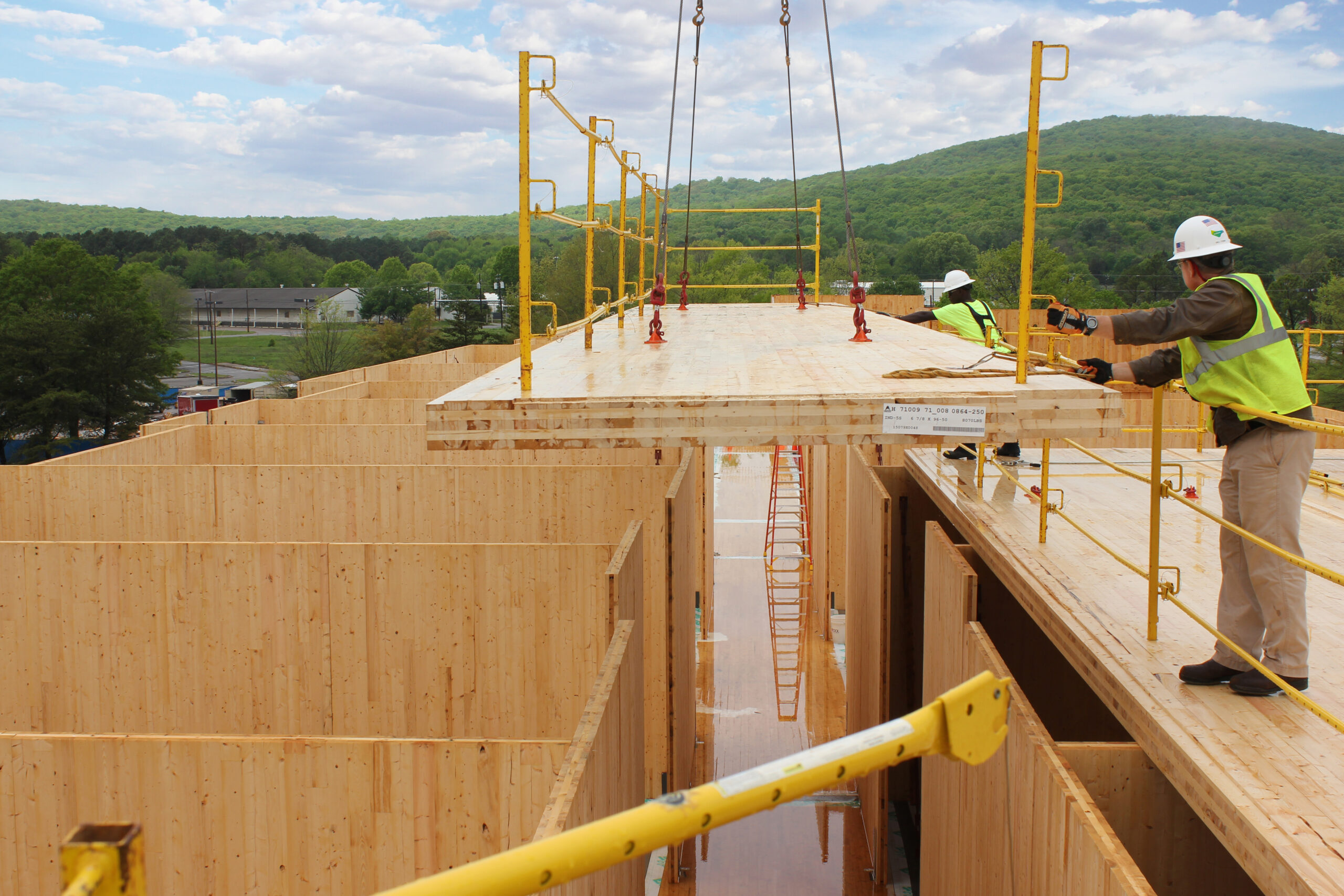
Candlewood Suites Hotel at Redstone Arsenal / Lendlease / Schaefer
Photo Lendlease
Additional Resources
Fire-tested wall assemblies:
Mass Timber Fire & Acoustic Database
Exterior Walls in Mass Timber Buildings – 5-part series:
Part 1: Code Requirements and Commonly Used Materials
Part 2: Common Floor-to-Wall Details
Part 3: Cladding Material Allowances, Types, and Support Details