Solution Papers
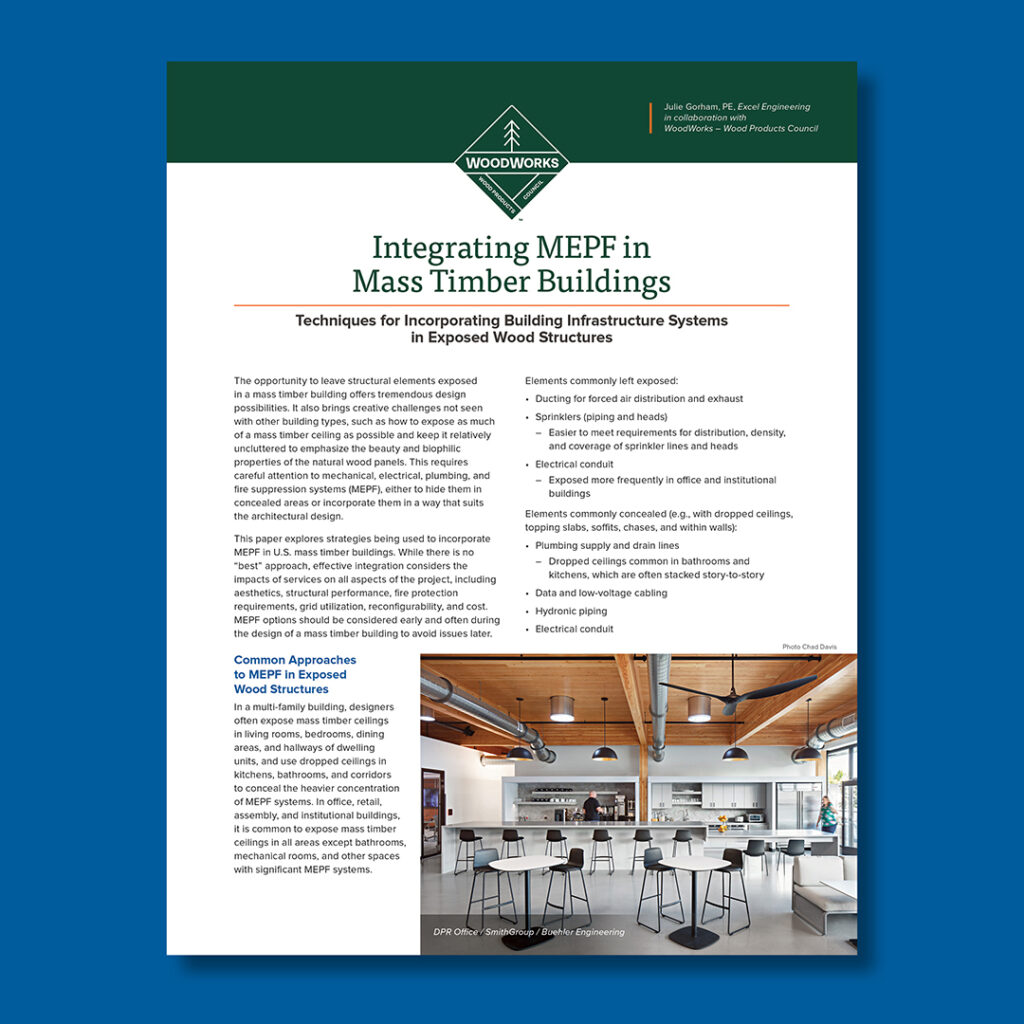
Integrating MEPF in Mass Timber Buildings: Techniques for Incorporating Building Infrastructure Systems in Exposed Wood Structures
Explores common approaches to MEPF in U.S. projects
While integrating MEPF systems is an important part of any building design, it is critical in mass timber projects because it impacts everything from aesthetics and structural performance to fire protection, grid utilization, reconfigurability, and cost. The most appropriate solution is one that accounts for all of the impacted areas in the context of the project’s goals.


The opportunity to leave structural elements exposed in a mass timber building offers tremendous design possibilities. It also brings creative challenges not seen with other building types, such as how to expose as much of a mass timber ceiling as possible and keep it relatively uncluttered to emphasize the beauty and biophilic properties of the natural wood panels. This requires careful attention to mechanical, electrical, plumbing, and fire suppression systems (MEPF), either to hide them in concealed areas or incorporate them in a way that suits the architectural design.
Featuring project examples throughout, this paper covers:
- Common approaches to service integration, including exposed elements and methods of routing ductwork, electrical conduit and fixtures, and low-voltage cabling
- Attaching MEPF systems
- Concealed spaces
- Structural grid options and impacts on MEPF integration
- One-way beam systems
- Two-way beam systems
- Penetrations and openings
- Stacked beam systems
- Gapped mass timber panels
- Point-supported CLT
- Conduit in topping slabs
- Radiant heat tubing in topping slabs
- Raised access floors
While there is no “best approach” to MEPF service integration, options should be considered early and often during the design of a mass timber building to avoid issues later.
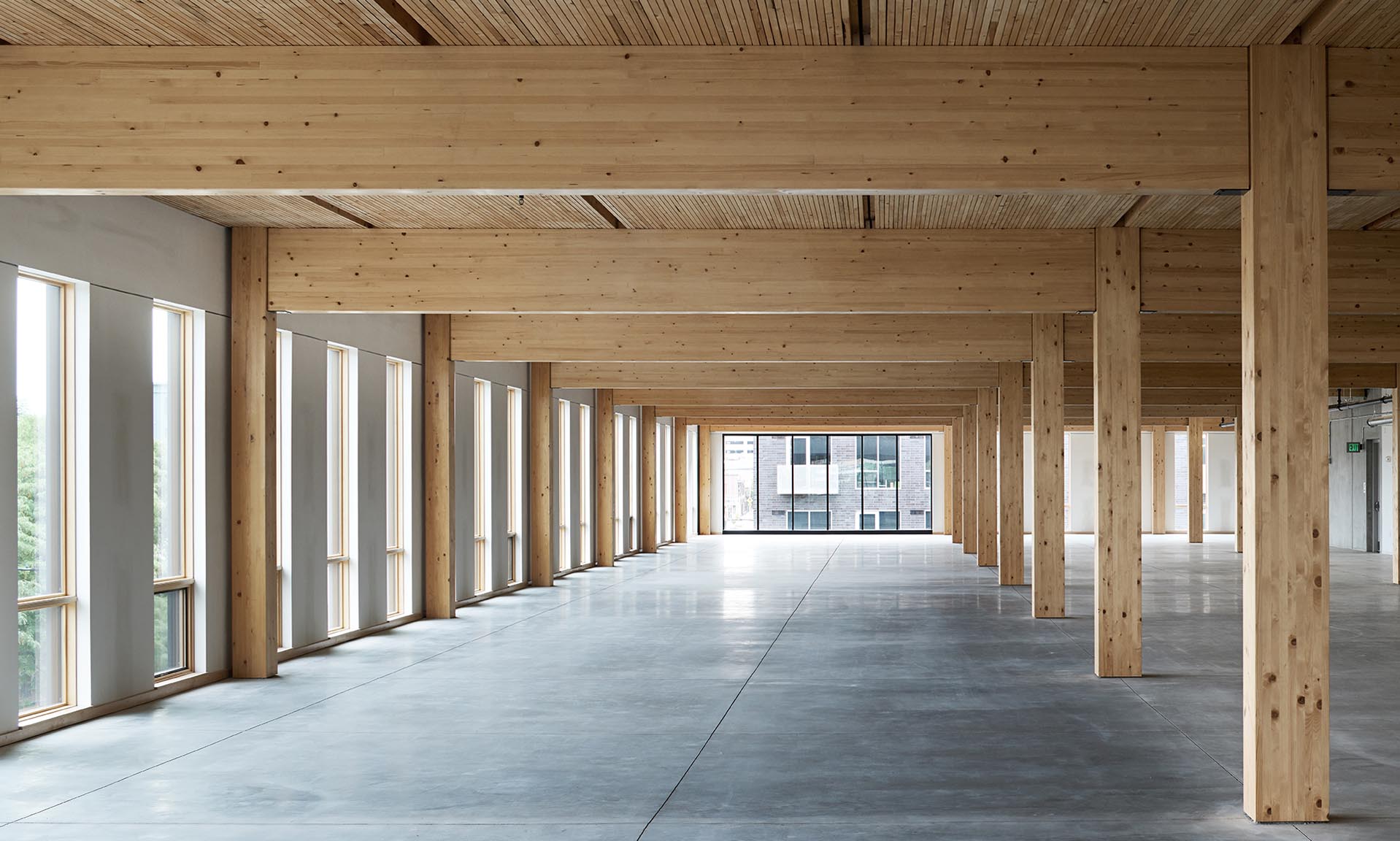
Photo: Mike Sinclair

Photo: ADX Creative
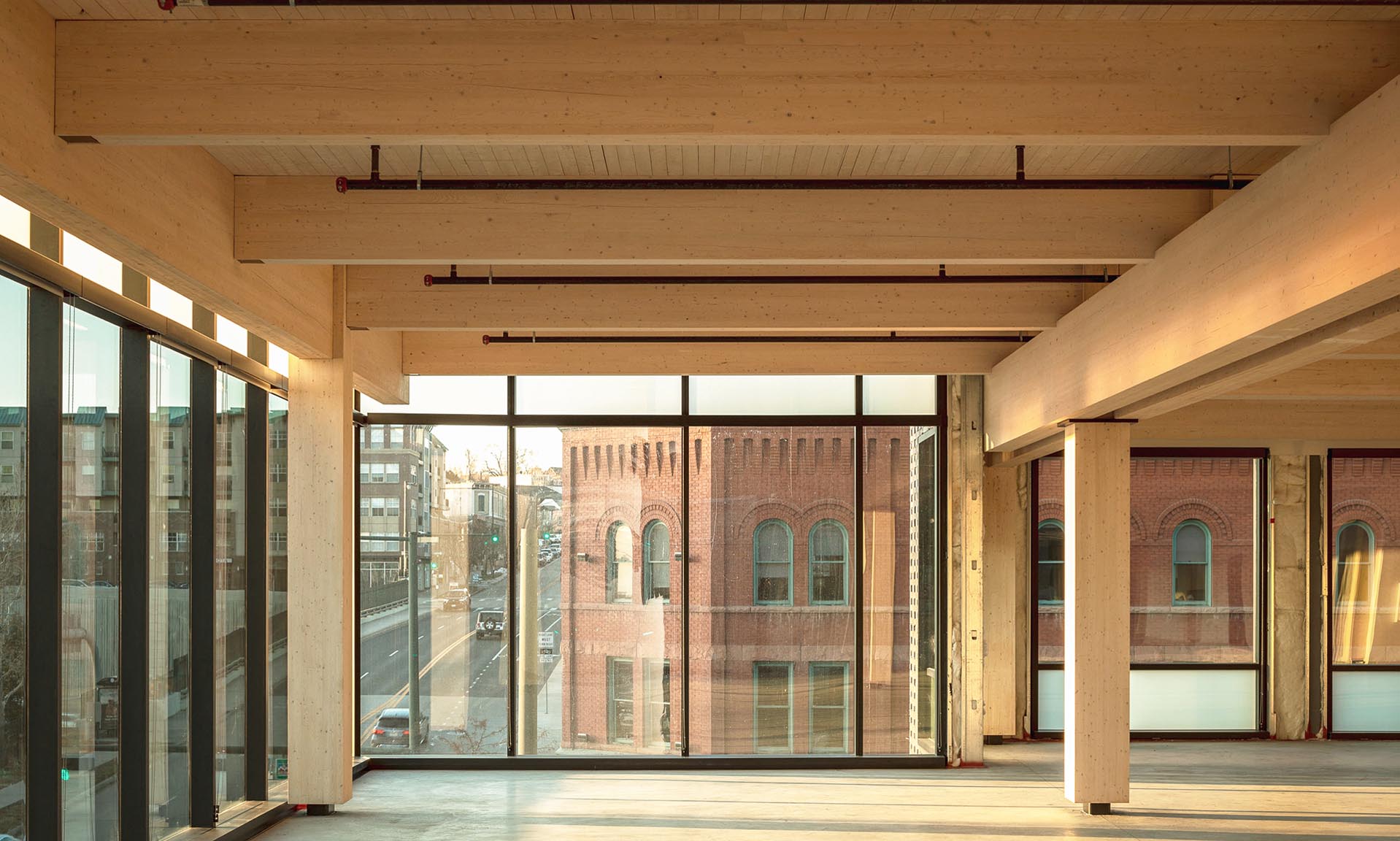
Photo: JC Buck
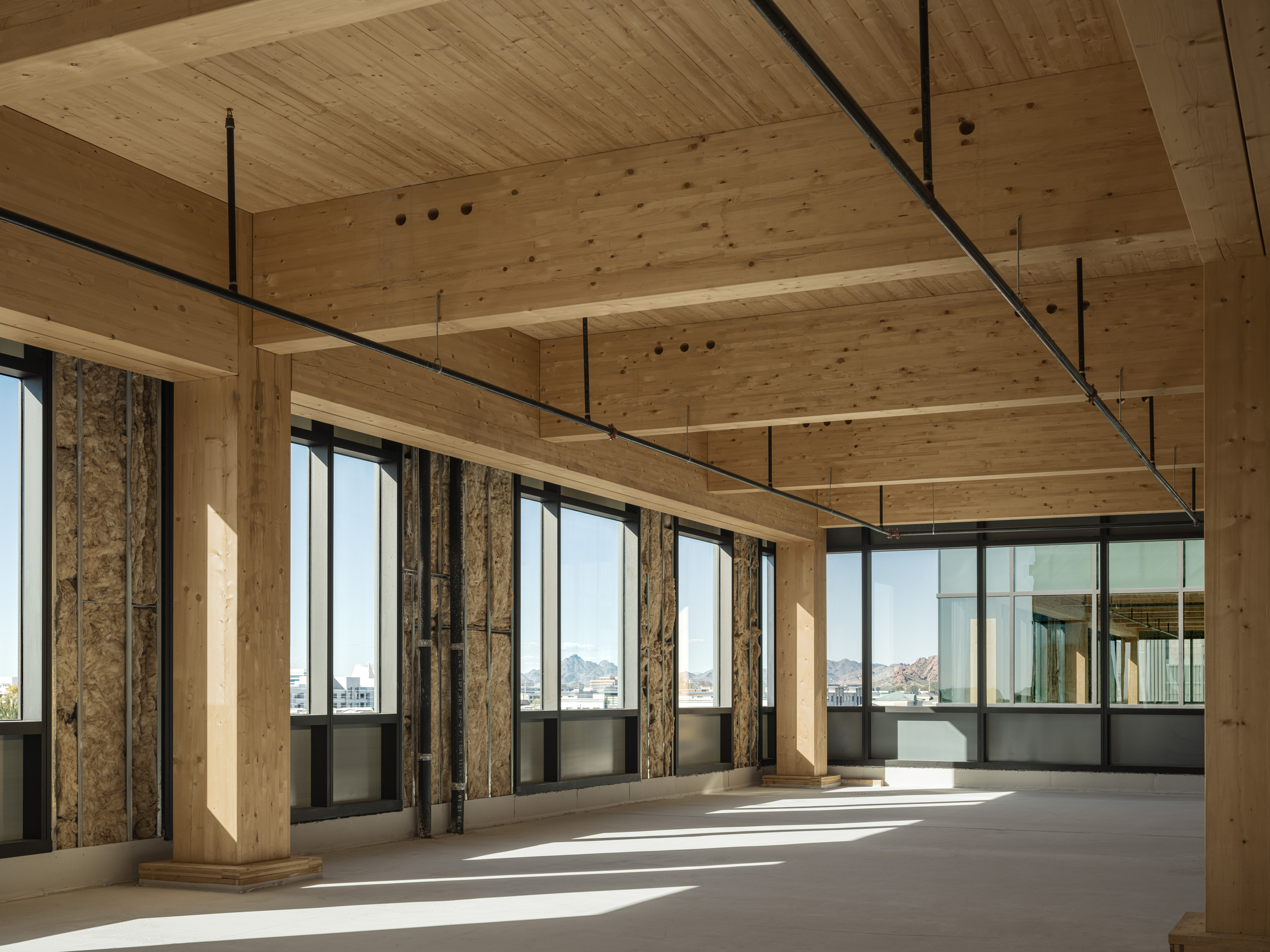
Photo: Jason Roehner Phorographs
Related Resources
-
 What is mass timber? Solution Papers
 -
Fire Requirements for Mass Timber Elements: Code Applications, Construction Types, and Fire Ratings Solution Papers
-
Wood in Industrial Buildings: Systems, Codes, and Design Opportunities Solution Papers
-
Fire Design of Mass Timber Structural Members: Demonstrating Fire-Resistance Ratings of Mass Timber Products Solution Papers