Solution Papers
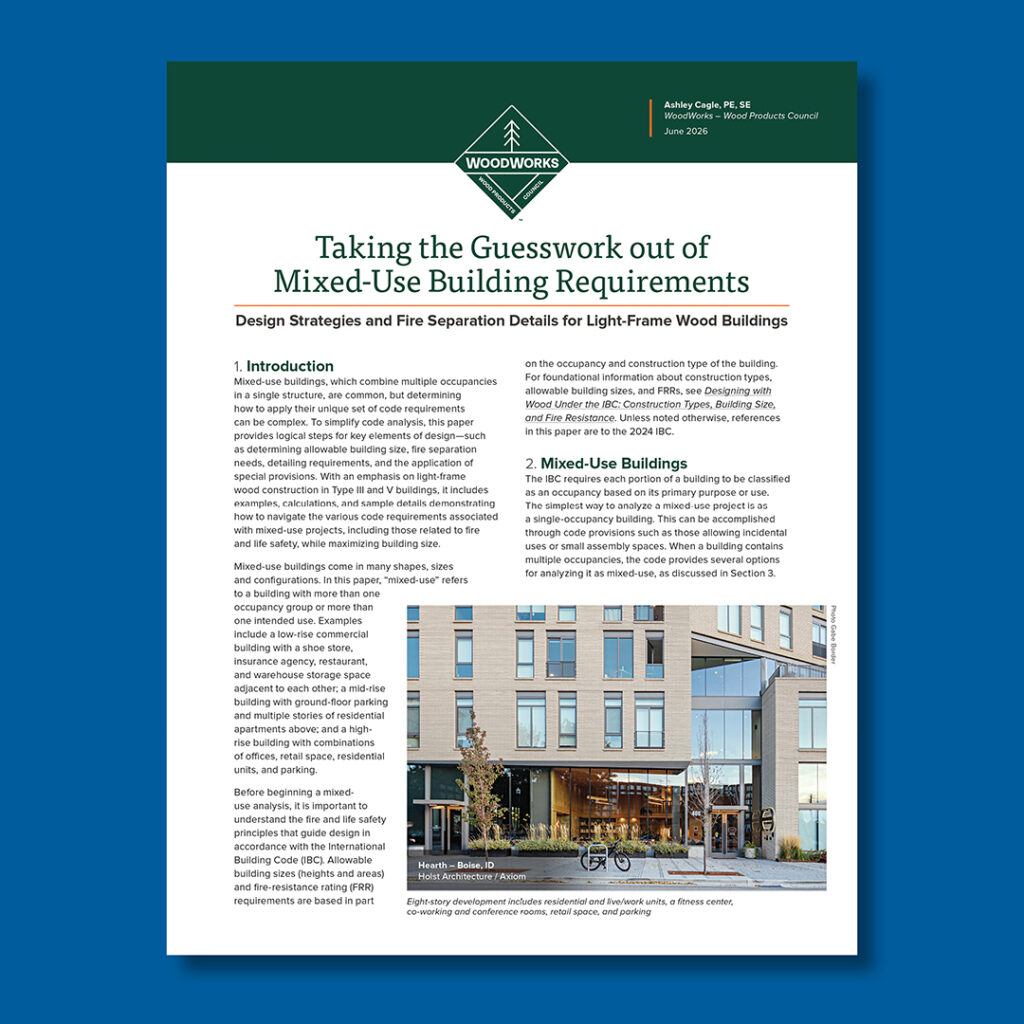
Taking the Guesswork out of Mixed-Use Building Requirements
Design strategies and fire separation details for light-frame wood buildings
Mixed-use buildings, which combine multiple occupancies in a single structure, are common, but determining how to apply their unique set of code requirements can be complex. To simplify code analysis, this paper provides logical steps for key elements of design—such as determining allowable building size, fire separation needs, detailing requirements, and the application of special provisions. With an emphasis on light-frame wood construction in Type III and V buildings, it includes examples, calculations, and sample details demonstrating how to navigate the various code requirements associated with mixed-use projects, including those related to fire and life safety, while maximizing building size.
Updated June 2026

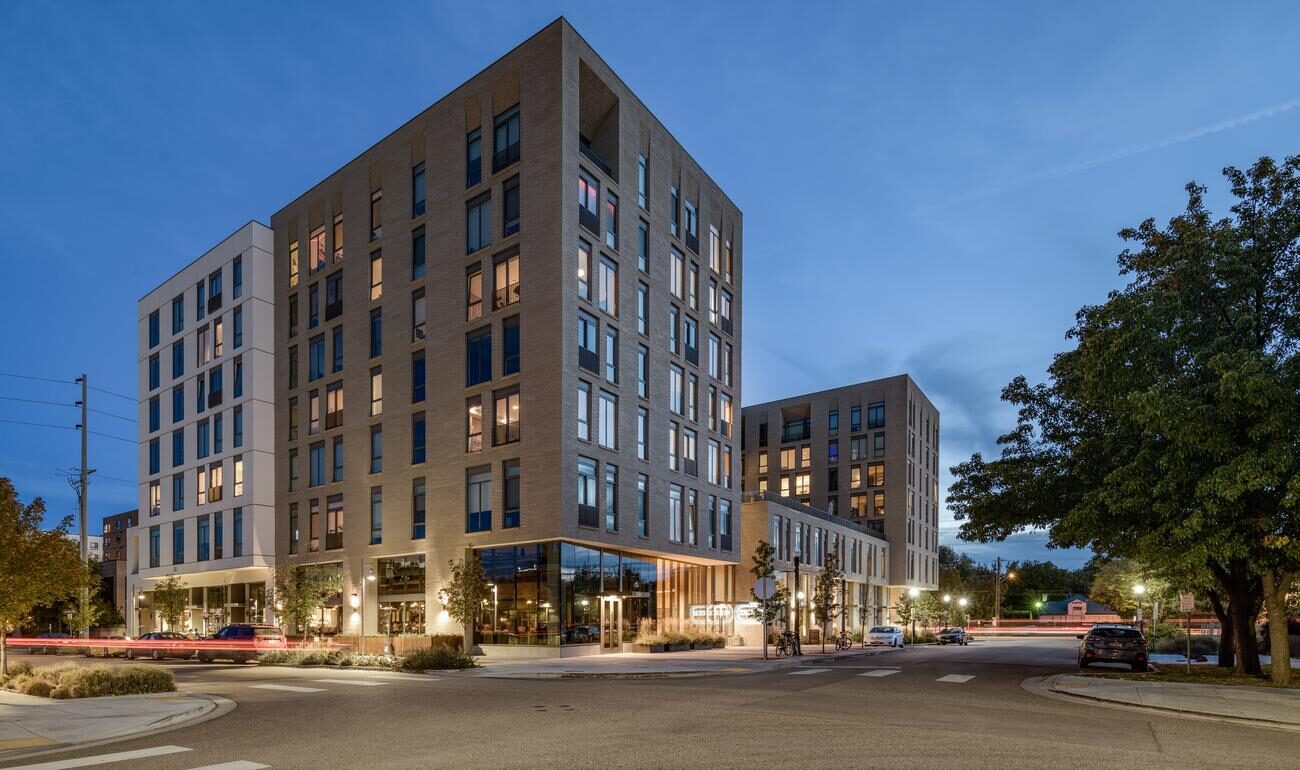
photo Gabe Border
Mixed-use buildings come in many shapes, sizes and configurations. In this paper, “mixed-use” refers to a building with more than one occupancy group or more than one intended use. Examples include a low-rise commercial building with a shoe store, insurance agency, restaurant, and warehouse storage space adjacent to each other; a mid-rise building with ground-floor parking and multiple stories of residential apartments above; and a high-rise building with combinations of offices, retail space, residential units, and parking.
Before beginning a mixed-use analysis, it is important to understand the fire and life safety principles that guide design in accordance with the IBC. Allowable building sizes (heights and areas) and fire-resistance rating (FRR) requirements are based in part on the occupancy and construction type of the building. For foundational information about construction types, allowable building sizes, and FRRs, see the WoodWorks paper, Designing with Wood Under the IBC: Construction Types, Building Size, and Fire Resistance. Unless otherwise noted, references in this paper are to the 2024 IBC.
Expand your knowledge of mixed-use building analysis:
Taking the Guesswork Out of Mixed-Use Building Requirements covers the following topics and presents 15 examples illustrating the analysis of different occupancy combinations.
- Mixed-use buildings
- Incidental uses
- Accessory occupancies
- Live/work units
- Small buildings and tenant spaces
- Small assembly spaces
- Other assembly spaces
- Occupiable roofs
- Mezzanines and equipment platforms
- Mixed-use building analysis
- Nonseparated occupancies
- Separated occupancies
- Combination of nonseparated and separated occupancies
- Sprinkler thresholds and fire areas
- Creating separation in mixed-use buildings
- Horizontal assemblies
- Fire barriers
- Fire walls
- Unique separation requirements
- Horizontal building separation
- Mixed-use buildings with parking
- Code requirements for parking structures
- Occupancy separation option
- Parking beneath Group R
- Open parking garage beneath Group A, B, I, M, or R
Related Resources
-
 Why Consider a Panelized Wood Roof System for Commercial Buildings Solution Papers
 -
What is mass timber? Solution Papers
-
Designing with Wood Under the IBC: Construction Types, Building Size, and Fire Resistance Solution Papers
-
Fire Design of Mass Timber Connections: Requirements and Compliance Strategies Solution Papers