Solution Papers
Fire Design of Mass Timber Structural Members: Demonstrating Fire-Resistance Ratings of Mass Timber Products
Presents code-compliant testing and analytical methods for demonstrating the FRR of assemblies and structural members
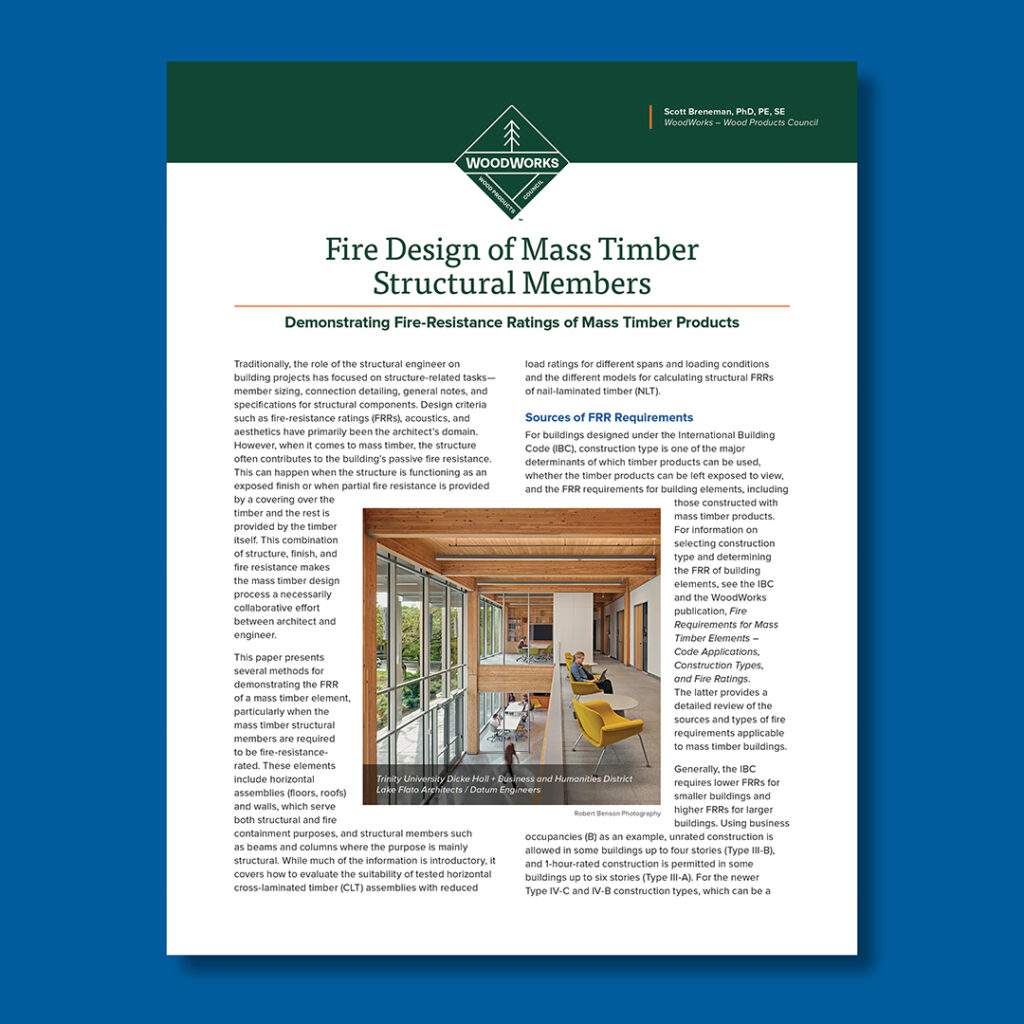
Mass timber is uniquely positioned as a structural building material that can be left exposed while also achieving a fire-resistance rating (FRR). The IBC provides multiple commonly used methods of demonstrating FRRs through testing and analytical provisions, and engineers should keep each of these options open until they determine which will be more advantageous based on the specific FRR requirements, member sizes, spans, and loading conditions.

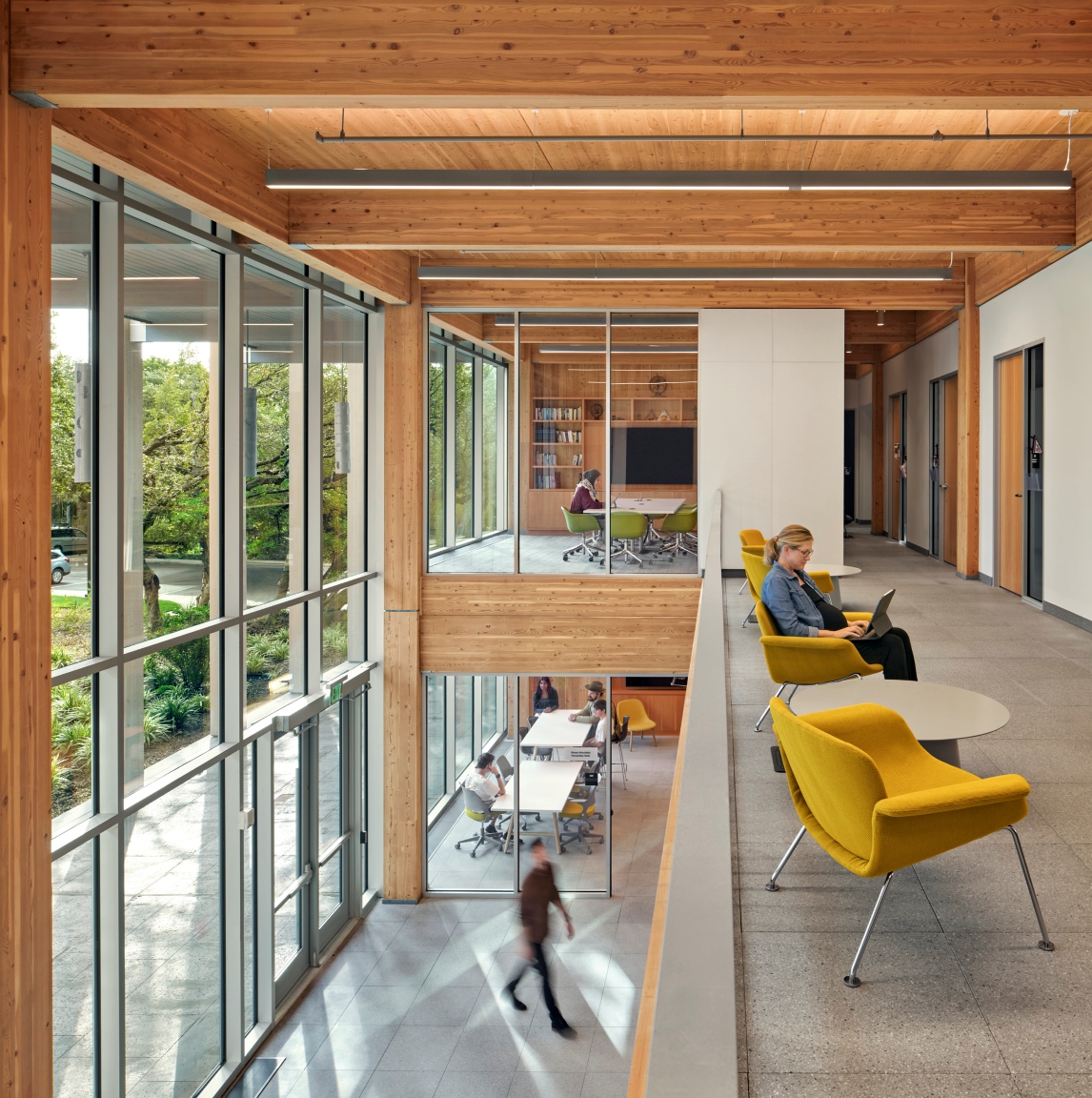
Lake Flato Architects / Datum Engineers / Robert Benson Photography
Traditionally, the role of the structural engineer on building projects has focused on structure-related tasks—such as member sizing, connection detailing, general notes, and specifications for structural components. Design criteria such as FRRs, acoustics, and aesthetics have primarily been the architect’s domain. However, when it comes to mass timber, the structure often contributes to the building’s passive fire resistance. This can happen when the structure is functioning as an exposed finish or when partial fire resistance is provided by a covering over the timber and the rest is provided by the timber itself. This combination of structure, finish, and fire resistance makes the mass timber design process a necessarily collaborative effort between architect and engineer.
This paper presents several methods for demonstrating the FRR of a mass timber element, particularly when the mass timber structural members are required to be fire-resistance-rated. These elements include horizontal assemblies (floors, roofs) and walls, which serve both structural and fire containment purposes, and structural members such as beams and columns where the purpose is mainly structural. Valuable content includes how to evaluate the suitability of tested horizontal cross-laminated timber (CLT) assemblies with reduced load ratings for different spans and loading conditions and the different models for calculating structural FRRs of nail-laminated timber (NLT).
Topics include:
- Sources of FRR requirements
- Methods of demonstrating the FRR of a mass timber member
- Tested FRRs
- Analytical methods for FRRs
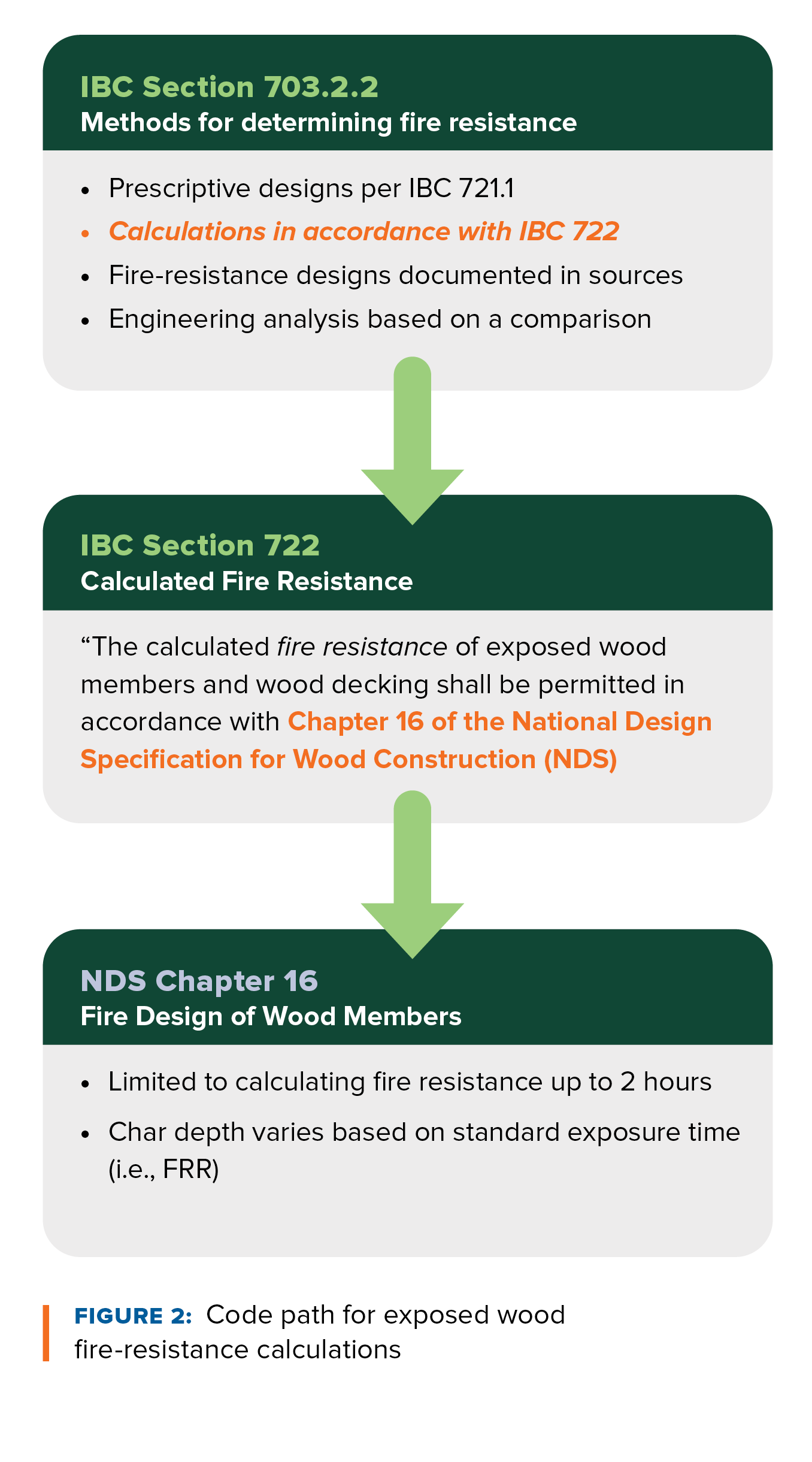
- Calculated fire resistance in IBC 722
- Calculated fire resistance of wood members
- Calculated char depth
- Strength checks for structural FRRs
- Simple sawn lumber beam example
- The American Wood Council’s Fire Design Specification for Wood Construction and Calculating the Fire Resistance of Wood Members and Assemblies (TR-10)
- Thermal separation and burn-through resistance of a structural member
- Noncombustible protective covering
- Structural fire resistance of glulam
- Structural FRR of CLT
- Calculated char depth of CLT using the NDS model
- 1-hour FRR for 5-ply, 6-7/8-inch CLT
- Other calculated CLT fire design conditions
- Tested fire resistance of CLT
- Structural FRR of NLT
- Calculation method 1: NDS provisions for lumber decking
- Calculation method 2: FDS char penetration at abutting edges
- Calculation method 3: One-dimensional char model
- Fire-resistance-tested NLT assemblies
- Lumber decking
- Connections between mass timber panels
Related Resources
-
 What is mass timber? Solution Papers
 -
Fire Requirements for Mass Timber Elements: Code Applications, Construction Types, and Fire Ratings Solution Papers
-
Wood in Industrial Buildings: Systems, Codes, and Design Opportunities Solution Papers
-
Integrating MEPF in Mass Timber Buildings: Techniques for Incorporating Building Infrastructure Systems in Exposed Wood Structures Solution Papers