Solution Papers
Wood in Industrial Buildings: Systems, Codes, and Design Opportunities
Introduces the use of wood structural systems, focusing on the advantages of light-frame, mass timber, and hybrid approaches
Modern industrial buildings are evolving to include more structural wood as owners, developers, and designers seek solutions that balance cost efficiency, sustainability, and occupant well-being. Advances in light-frame, mass timber and panelized systems, combined with ongoing refinements to building codes, have expanded the practical and code-compliant use of wood across a range of warehouse, manufacturing, and flex building types.

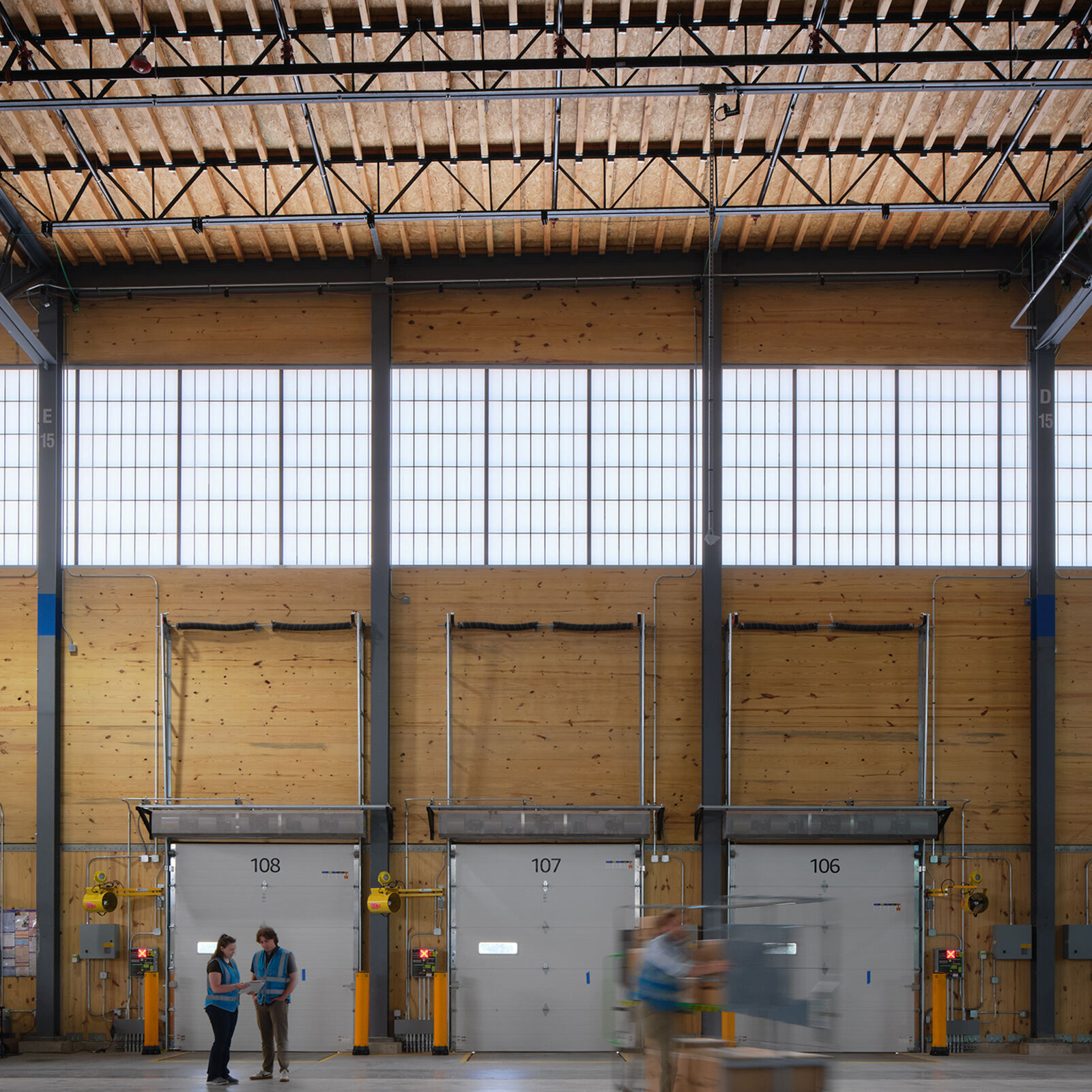
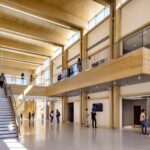
ZGF Architects / Atlantic AE / KPFF
When applied strategically, wood systems can reduce embodied carbon, accelerate construction schedules, and create warmer, more human-centered environments that support leasing, retention, and long-term asset value. However, realizing these benefits requires early coordination and informed selection of the appropriate system, along with a clear understanding of how construction type, allowable area, and fire-resistance requirements interact.
This paper covers:
- Benefits of wood in industrial building types
- Structural wood products and systems
- Light-frame wood products
- Mass timber products
- Panelized systems
- Vertical and lateral load-resisting systems
- Fire and life safety
- Occupancy classifications
- Wood and construction types
- Fire-resistance rating (FRR) requirements
- Selecting a construction type
- Allowable building size
- Building height
- Mezzanines and equipment platforms
- Unlimited area buildings
- Calculating allowable building area
- Mixed-use code analysis
- Detailing considerations
- Concealed spaces
- Columns and parapets
- Durability
- Alternative materials, design, and methods of construction
As industrial building typologies continue to evolve, warehouses present a compelling opportunity to expand the adoption of wood at scale. Designers and owners are encouraged to engage WoodWorks early to take advantage of our free project assistance, which can support wood system selection, code analysis, and further technical support. By strategically applying the concepts described in this paper and leveraging available technical resources, project teams can successfully deliver high-performing, visually compelling industrial buildings with a lighter environmental footprint that help set a precedent for future development.
Related Resources
-
 What is mass timber? Solution Papers
 -
Fire Requirements for Mass Timber Elements: Code Applications, Construction Types, and Fire Ratings Solution Papers
-
Fire Design of Mass Timber Structural Members: Demonstrating Fire-Resistance Ratings of Mass Timber Products Solution Papers
-
Integrating MEPF in Mass Timber Buildings: Techniques for Incorporating Building Infrastructure Systems in Exposed Wood Structures Solution Papers