Solution Papers
Fire Design of Mass Timber Connections: Requirements and Compliance Strategies
Introduces the design of mass timber connections for fire resistance
This paper is intended for architects and engineers with limited experience in the design of mass timber connections for fire resistance. It describes pathways for compliance under the IBC, connection types, and methods for determining a fire-resistance rating (FRR). It is a companion to the papers, Fire Requirements for Mass Timber Elements: Code Applications, Construction Types, and Fire Ratings and Fire Design of Mass Timber Structural Members: Demonstrating Fire Resistance Ratings of Mass Timber Products.

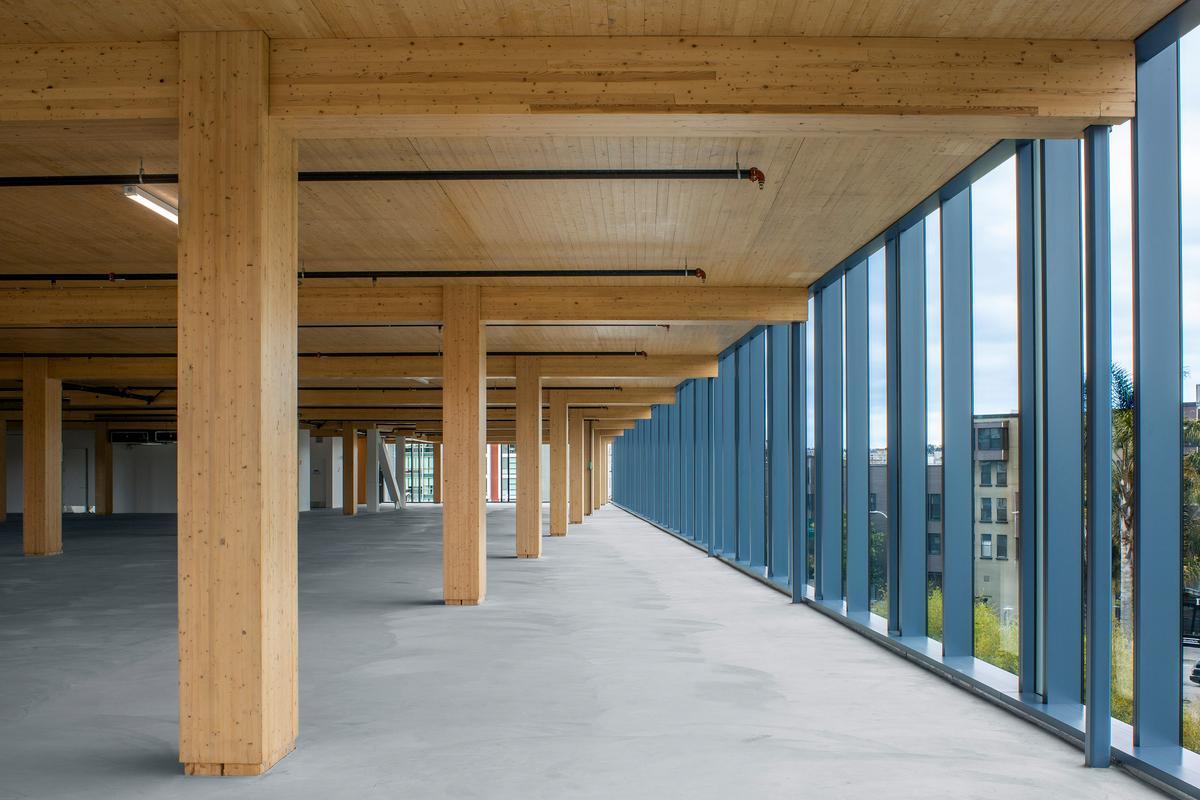
SKS Partners / Perkins&Will / DCI Engineers
Photo David Wakely
References in this paper are to the 2024 IBC and may be applicable to other editions.
IBC Section 704 provides fire-resistance rating (FRR) requirements specific to structural members. This section does not explicitly mention connections; however, it states that the FRR of a structural member “shall not be less than the ratings required for the fire-resistance-rated assemblies supported by the structural members.” In other words, for connections between fire-resistance-rated structural members, the connection needs fire protection that achieves at least the same FRR as the supported member(s).
Other sections of the IBC have FRR requirements that apply to structural members based on aspects of the project such as construction type (Table 601), occupancy separations (Section 508), dwelling unit separations (Section 420.1), and support of horizontal assemblies (Section 711).
This paper focuses on IBC requirements and compliance strategies for connections in mass timber and hybrid building projects in the U.S. It covers:
- Paths for demonstrating fire resistance of a connection assembly, including:
- Fire-resistance testing (Section 703.2.1)
- Analytical methods (Section 703.2.2)
- Timber connections in Types IV-A, IV-B, and IV-C construction (Section 2304.10.1)
- Mass timber panel connections, including:
- Panel-to-panel connections
- Floor-to-wall connections
- Connections located on a beam
- Adhesives or sealants at panel intersections
- Mass timber framing connections, including:
- Timber-to-timber connections
- Embedded knife plate connectors
- External metal connectors
- Fully concealed metal connectors
- Project design and approvals
- Required documentation
- Special inspections
Additional connection types, along with information on their load capacity, cost, and constructability, can be found in the WoodWorks Index of Mass Timber Connections and collection of structural CAD & Revit Details.
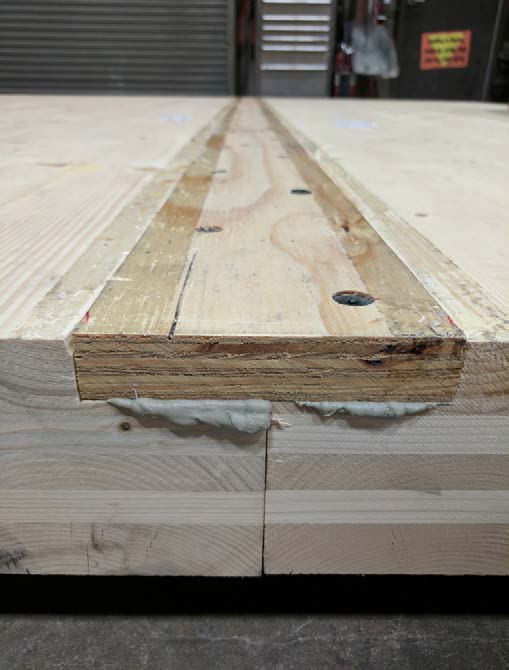
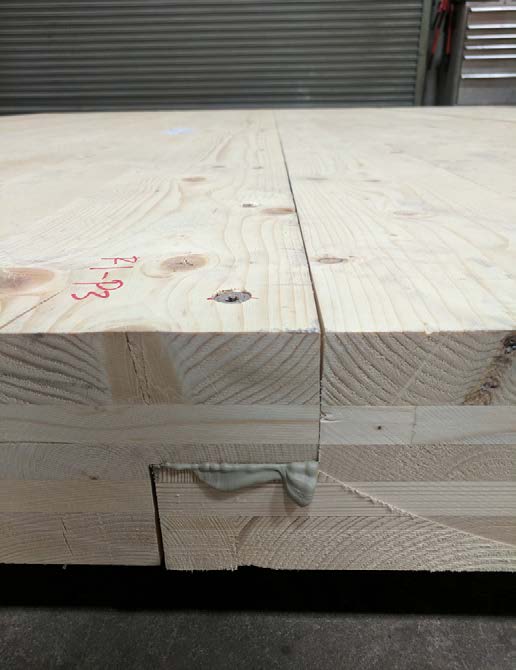
Figure 5: Five-ply CLT panels connected with a surface spline (left) and half-lap connection (right)
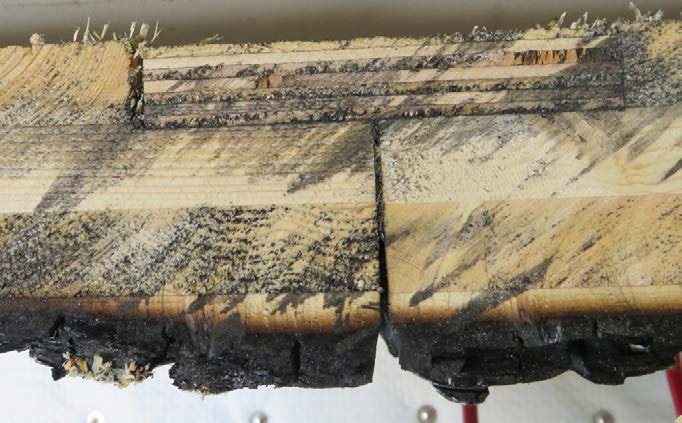
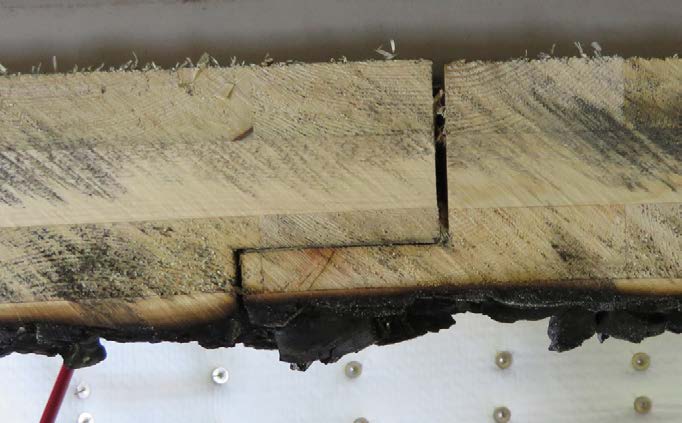
Figure 7: CLT panel-to-panel connection after a fire test, including surface spline (left) and half-lap (right)
Related Resources
-
 What is mass timber? Solution Papers
 -
Fire Requirements for Mass Timber Elements: Code Applications, Construction Types, and Fire Ratings Solution Papers
-
Wood in Industrial Buildings: Systems, Codes, and Design Opportunities Solution Papers
-
Fire Design of Mass Timber Structural Members: Demonstrating Fire-Resistance Ratings of Mass Timber Products Solution Papers